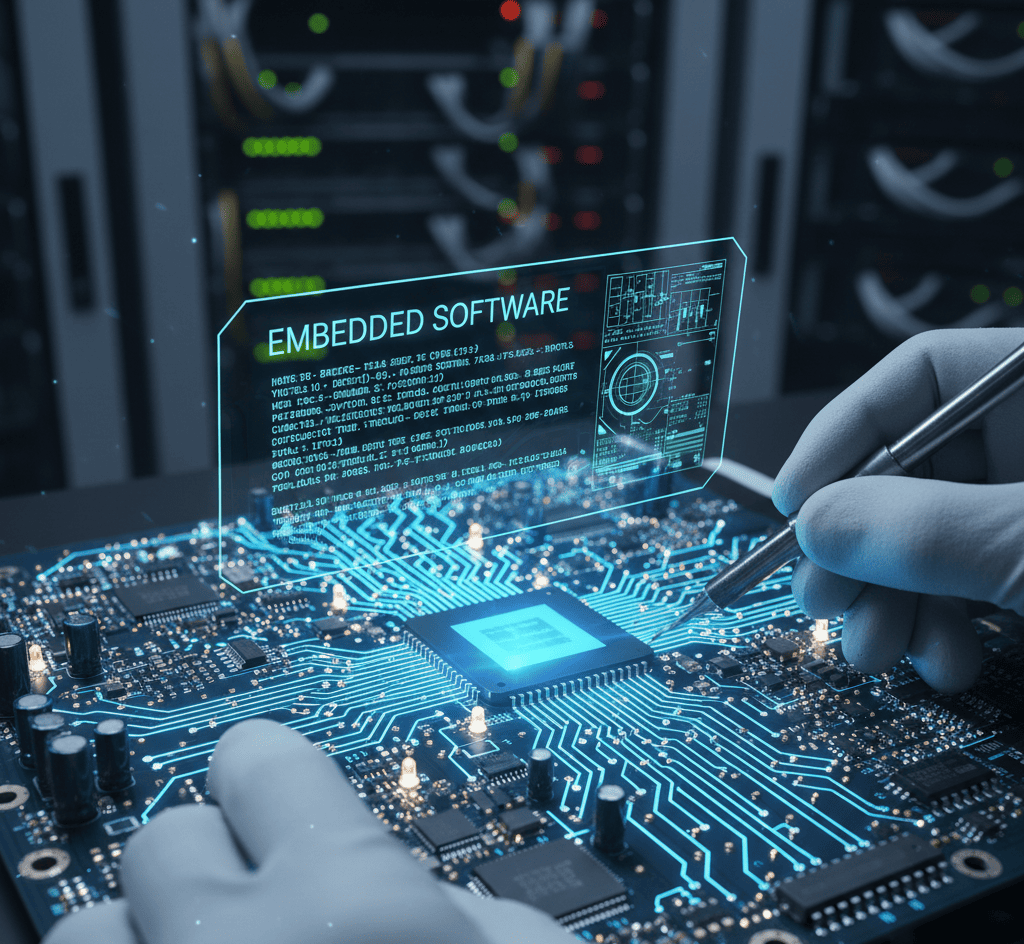
Embedded Firmware and Embedded Software: The Core of Modern Electronics
In today’s fast-paced digital world, almost every modern electronic device—from smartwatches to industrial machines—relies on the seamless interaction of embedded firmware and embedded software. These invisible drivers are what breathe life into hardware, making devices smart, efficient, and user-friendly.
In this blog, we’ll explore what embedded firmware and embedded software are, their unique characteristics, key differences, why they are essential in modern technology, and how DigitalMonk are leading the way in prototype development powered by these technologies.
What is Embedded Software?
Embedded software is specialized computer software programmed into hardware devices. Unlike application software that runs on general-purpose computers, embedded software is designed to control specific functions of a device or machine.
It operates on microcontrollers or microprocessors, managing tasks such as controlling sensors, managing data, or running user interfaces. Examples include the software running in your washing machine, GPS system, or smart thermostat.
- Controls hardware functions
- Handles user interface logic
- Manages real-time operations
What is Firmware?
Firmware is a type of software that provides low-level control for a device’s hardware. It is usually stored on non-volatile memory like ROM, EEPROM, or flash. Firmware acts as the bridge between hardware and higher-level software layers. Think of firmware as the set of instructions a device uses to initialize and operate its components—like a bootloader in your phone or BIOS in your computer.
- BIOS in computers
- Controller code in printers
- Firmware in network routers
- Microcontroller code in embedded devices
Characteristics of Embedded Firmware
Embedded firmware, while similar in some ways, has its own distinct features:
Non-Volatile Storage
Stored permanently on the device and not usually erased or modified during operation.
Low-Level Hardware Control
Directly interacts with hardware components like motors, sensors, and communication interfaces.
Rarely Updated
Often updated only through firmware patches or during maintenance cycles.
Highly Optimized
Minimalist and optimized for performance and size.
Boot and Initialization
Helps initialize hardware during startup.
From Idea to Prototype — We’ve Got You Covered
Key Differences Between Embedded Software and Firmware
While both embedded software and firmware serve distinct roles, they often work in tandem to control the entire device efficiently.
Why Are Embedded Firmware and Embedded Software Important?
The significance of embedded systems in today’s world cannot be overstated. These components power nearly every smart device and are the backbone of various industries.
Automation and Efficiency
Embedded software automates processes, reduces manual intervention, and improves operational efficiency.
Reliability
Firmware ensures reliable device startup and fundamental hardware interactions.
IoT and Smart Devices
From smart homes to industrial automation, embedded systems are the cornerstone of the Internet of Things (IoT).
Medical Devices
Life-saving equipment like ventilators and glucose monitors depend on flawless embedded firmware and software.
Cost Optimization
Tailored firmware and software reduce hardware requirements, making devices affordable without compromising functionality.
Role of Embedded Software And Firmware In Different Industries
Let’s take a quick look at how embedded firmware and software play out in various domains:
Automotive
Controls ABS brakes, airbags, infotainment systems.
Healthcare
Manages pacemakers, diagnostic machines, and wearable trackers.
Consumer Electronics
Powers smartphones, TVs, and smart appliances.
Industrial Automation
Drives robotics, sensors, control panels, and safety systems.
How DigitalMonk Excels in Prototype Development
At DigitalMonk, we specialize in embedded system design, firmware development, and embedded software solutions to help businesses launch high-quality, intelligent products faster.
Our Process:
Requirement Gathering
We begin by understanding client requirements—be it a smart vending machine, industrial controller, or wearable device.
Hardware Selection
We choose the right microcontroller/microprocessor, sensors, and other components based on project needs.
Firmware Development
Our firmware experts write low-level code to initialize and control hardware with maximum performance and minimum resource use.
Embedded Software Design
We develop software that runs the system logic, UI/UX, communication protocols, and more.
Rapid Prototyping
Using fast prototyping boards like Raspberry Pi or custom PCBs, we quickly develop proof-of-concept models for early testing and validation.
Testing and Debugging
We rigorously test all aspects—from boot sequences to real-time performance—to ensure robustness and reliability.
Real-World Applications
Whether it’s a custom vending machine or embedded software development, DigitalMonk ensures that every prototype is future-ready, scalable, and user-friendly.
Conclusion
Embedded firmware and embedded software may not be visible to the naked eye, but they are the engines that drive modern digital technology. From managing simple button presses to executing complex sensor fusion algorithms, these software layers keep our devices intelligent and functional.
Companies like DigitalMonk are harnessing the power of embedded systems to build innovative, reliable, and scalable prototypes that power the future of smart products. Whether you’re building a healthcare device, IoT solution, or custom hardware, understanding and leveraging the synergy between firmware and software is key to success.
Frequently Asked Questions (FAQ)
Yes. Most modern devices use both. Firmware handles basic hardware control and startup, while embedded software manages higher-level functions.
Not always. While firmware is stored in non-volatile memory, modern devices often allow firmware updates to fix bugs or enhance features.
Common languages include C, C++, and sometimes Python (for prototyping), Assembly (for firmware), and even Java for high-level tasks.
It enables devices to make intelligent decisions, respond to user inputs, and optimize processes, thereby improving performance and user experience.
We bring together deep technical expertise, agile development, and industry-specific knowledge to create reliable, scalable embedded system prototypes rapidly.