Smart HVAC Control System — Built and Deployed by DigitalMonk
We build custom HVAC control software — touchscreen interfaces, web dashboards, multi-zone management, and scheduling systems that connect to your hardware over RS-485, Modbus, or BACnet.


What Our Smart HVAC Control Software Does
We develop the software layer that sits between HVAC hardware and the people who operate it. Not off-the-shelf thermostat apps — custom-built control systems designed around your specific equipment, protocols, and facility layout, the same protocol-level work our IoT specialists handle across other connected hardware projects.
Our HVAC software covers three layers:
On-device touchscreen UI
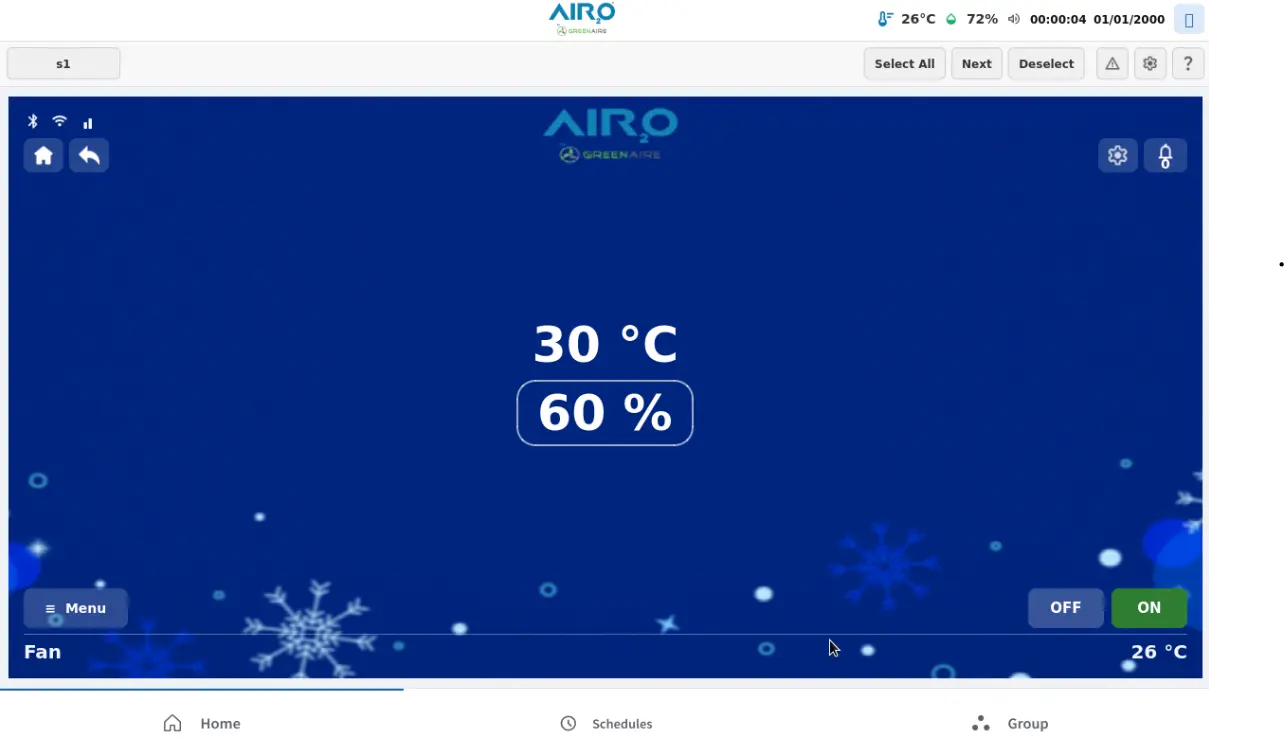
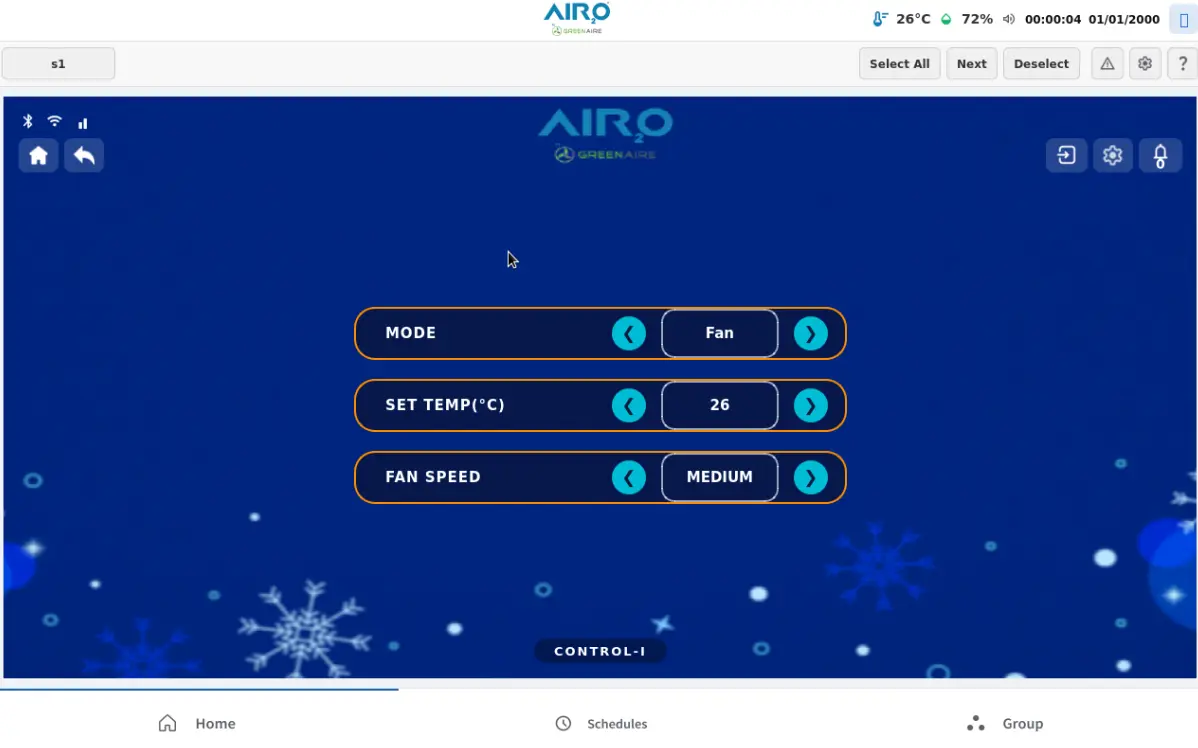
Operators get a local interface on the controller itself. Real-time temperature and humidity readings, mode selection, fan speed control, and ON/OFF switching — no laptop or phone needed for day-to-day use.
Live temperature and humidity readings on the AIRO controller interface — built for GREENAIRE
Multi-zone web dashboard
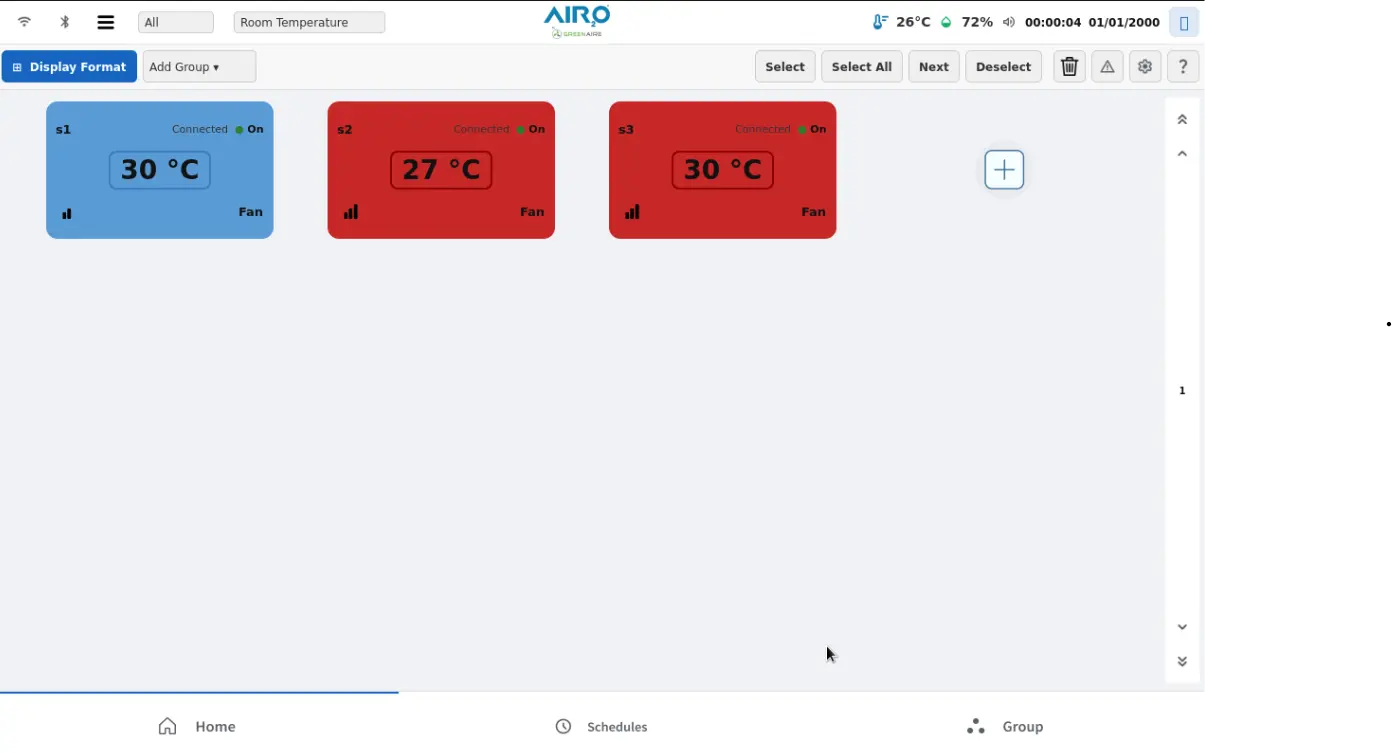
A browser-based interface for managing multiple HVAC units across a building, built with the same web development stack we use across our dashboard projects. Each zone shows live status with color-coded indicators: blue when within setpoint, red when out of range. Operators can select, group, and control units in bulk.
Web dashboard showing three connected zones with real-time temperature and connection status
Scheduling and group management
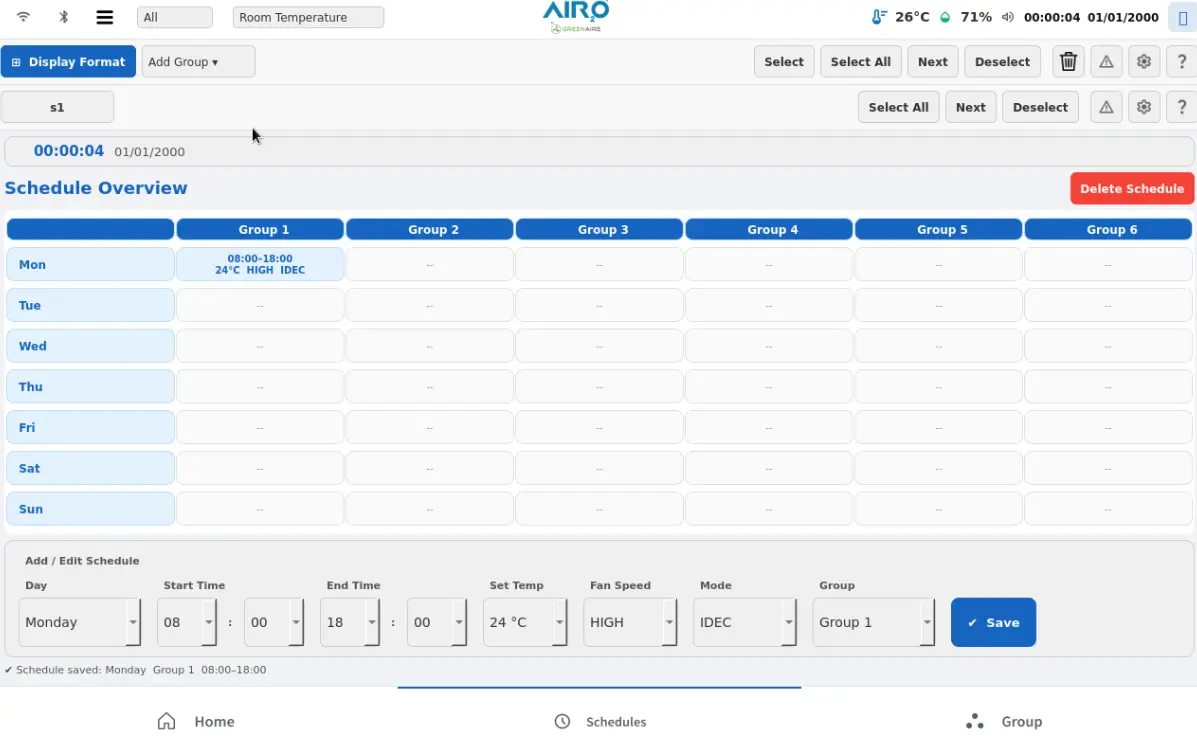
Weekly schedules per zone group, with configurable time windows, temperature setpoints, fan speed, and operating mode. Facility managers set it once and the system runs autonomously.
Weekly schedule view — Group 1 configured for 08:00–18:00, 24°C, high fan speed, IDEC mode
Case Study: AIRO Smart HVAC System for GREENAIRE
We built the complete software stack for GREENAIRE's AIRO smart HVAC control system. The system connects a master controller to multiple slave HVAC units using RS-485 Modbus communication and gives operators full control through both a local touchscreen and a web interface.
What we delivered:
Master-slave architecture over RS-485 Modbus
A single master controller communicates with multiple slave HVAC units. Each slave reports temperature, humidity, connection status, and operating parameters back to the master in real time.
Floor-level group control
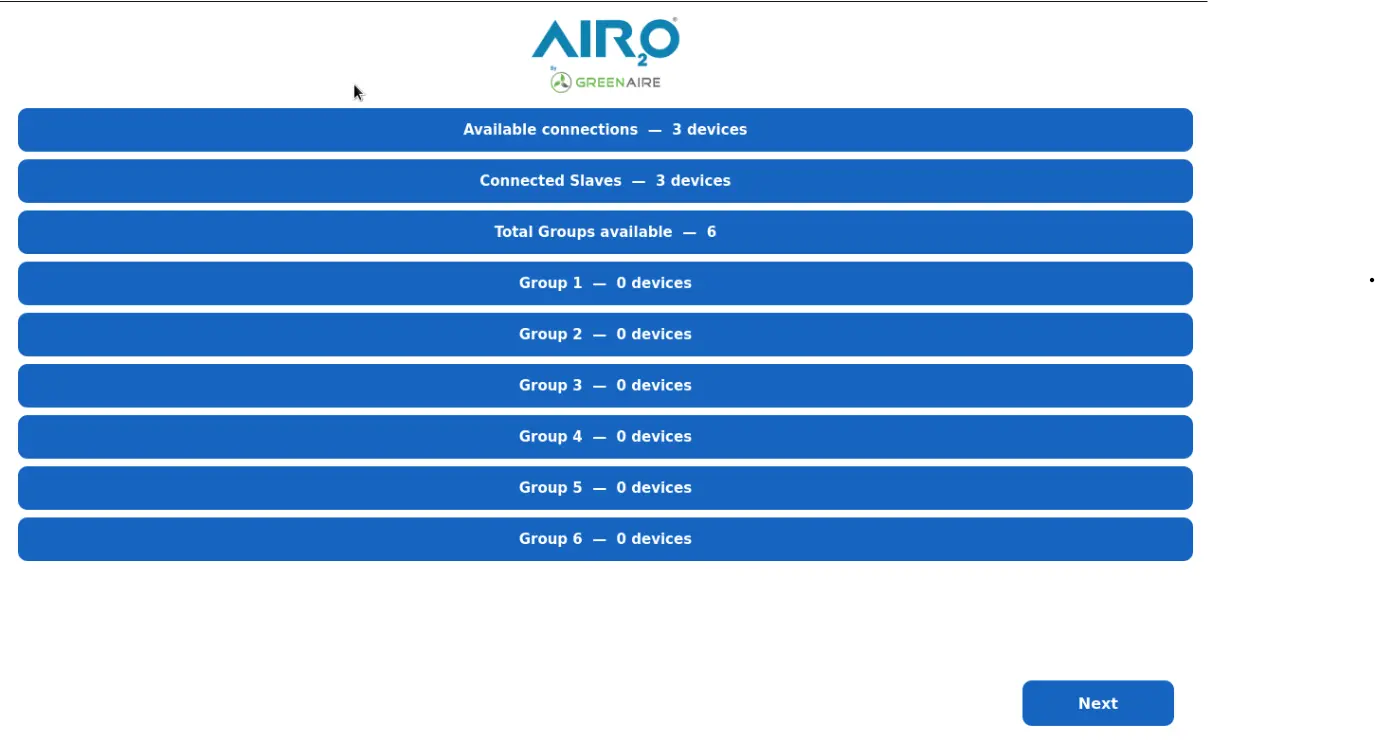
Units are organized into groups mapped to physical zones (floors, wings, areas). Operators can switch entire groups ON or OFF, set uniform temperatures, or adjust fan speeds across a zone — without touching individual units.
Group control interface — six groups with floor-level assignment, bulk ON/OFF, and per-group mode settings
Environmental monitoring
The system tracks indoor temperature, outdoor temperature, air supply temperature, humidity, electrical current draw, and water usage. This data is available in real time on both the touchscreen and the web dashboard.
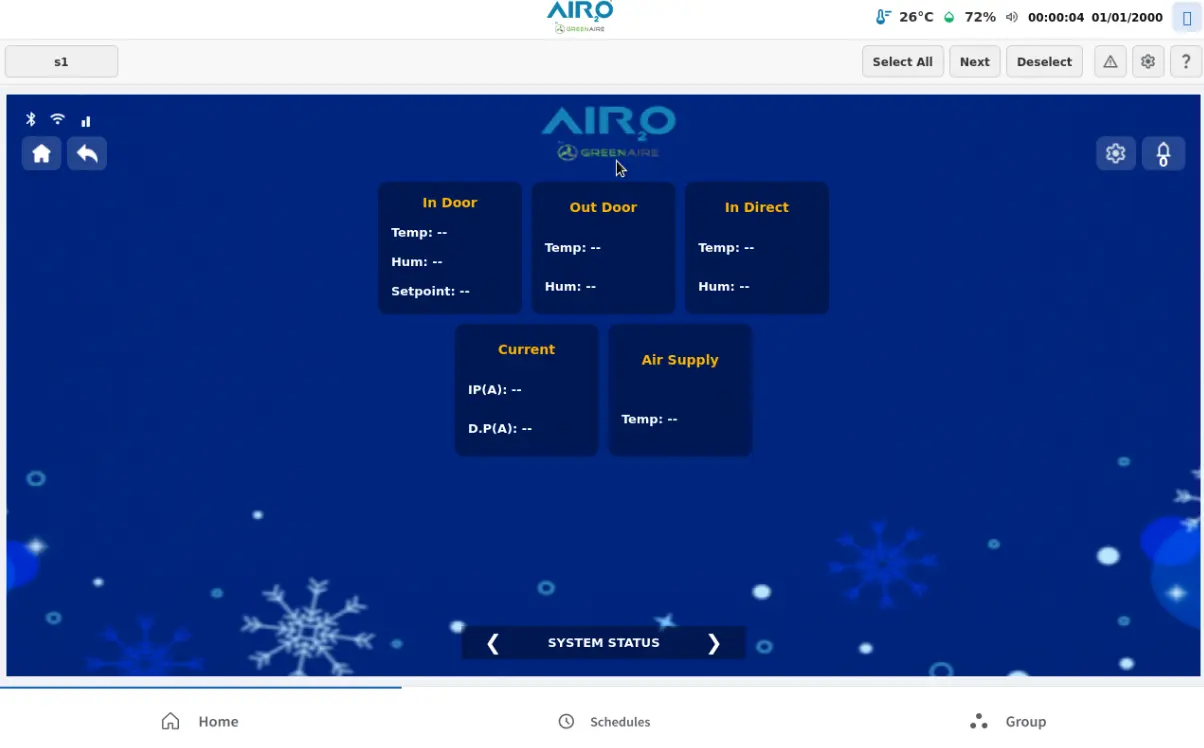
Sensor dashboard showing indoor, outdoor, and supply air readings alongside current monitoring
Energy and resource metering
Built-in power meter (voltage, current, kW, total consumption), water meter (daily usage in litres), and TDS meter (water quality in PPM). Facility managers can monitor energy consumption without a separate metering system.
Integrated metering panel — power consumption, water usage, and TDS quality readings
This system is live and deployed. The screenshots on this page were captured from GREENAIRE's production server — not mockups, not demo environments.
We Also Build BACnet-Based HVAC Automation Systems
RS-485 Modbus is one protocol. We've also delivered BACnet-based building automation systems using TCP/IP communication and port-based connectivity — the protocol standard for commercial building management.
For that project, we built the application in Python with PyQt5, packaged it as a standalone Windows executable, and configured it to run on Linux as well — the kind of cross-platform work typical of our embedded systems and electronics engineering. Whether your facility runs Windows workstations or Linux-based controllers, the software works.
With 6+ HVAC control projects delivered, we've worked across the protocol and platform combinations that commercial and industrial HVAC systems actually use.
Technical Stack and Protocols We Work With
Communication Protocols
- RS-485
- Modbus RTU / TCP
- BACnet/IP
- MQTT
What We Build
- Touchscreen UIs for on-device HVAC controllers
- Web-based dashboards for remote multi-zone monitoring and control
- Scheduling engines with per-group, per-day, per-time-window configuration
- Real-time sensor data display — temperature, humidity, air quality, energy metering
- Master-slave architectures for multi-unit coordination
- Alarm and alert systems for out-of-range conditions
Platforms
- Windows (.exe)
- Linux
- Web (browser-based)
Our software connects to your existing HVAC hardware. We handle the protocol layer, the control logic, and the operator interface — you keep your existing units, sensors, and building infrastructure.
Need a Smart HVAC Control System Built for Your Hardware?
We've built HVAC control software for 6+ clients across RS-485, Modbus, and BACnet. Tell us about your equipment and we'll scope a solution. Browse more of our work before you do.
Or call us: +91 62846-36956Frequently Asked Questions (FAQ)
We build the software — the control interfaces, dashboards, scheduling systems, and the communication layer that talks to your HVAC hardware. We work with your existing equipment or with hardware partners you choose.
RS-485, Modbus RTU and TCP, BACnet/IP, and MQTT. If your system uses a different protocol, talk to us — we've handled custom integrations before.
Yes. The AIRO system we built for GREENAIRE manages multiple slave units from a single master controller, organized into groups by floor or zone. Operators can control individual units or entire groups at once.
Both. We typically deliver a touchscreen interface for local operators and a browser-based dashboard for remote monitoring and management. The web interface works from any device — phone, tablet, or laptop.
Yes. We've deployed HVAC control software on both Windows and Linux. For the BACnet project, we packaged the same application as a Windows .exe and a Linux service.