We Build Connected Devices —
IoT Development from Idea to Production
Hardware, firmware, cloud, and apps. One team, full stack — not a vendor stitched from freelancers.
We work with startups and enterprises building connected devices — from the first hardware sketch to a production-ready, cloud-connected product. Every layer of the stack: PCB layout, embedded firmware, wireless connectivity, cloud backend, and the apps your users interact with. Unlike most IoT vendors who are software-only, we have real hardware in-house. We've shipped 80+ connected devices into the real world.
🔒 NDA signed before every discussion. Your idea is safe with us.
Start Your IoT Project
Free consultation · No commitment required


A Different Kind of
IoT Development Company
- ✕Software & apps only
- ✕No hardware expertise
- ✕Outsource firmware
- ✕Multiple vendors to manage
- ✕Gaps between layers
- ✔Hardware + firmware in-house
- ✔Embedded & PCB design
- ✔Connectivity & protocols
- ✔Cloud platforms & dashboards
- ✔One team, end-to-end
When you look at most companies ranking for "IoT development," you're looking at software houses. They'll wire up your dashboard, build a mobile app, and handle cloud integration — then point you toward a separate PCB vendor and an embedded contractor. That's multiple handoffs before you have a working device, and every handoff is a failure point.
We do the embedded hardware and firmware work ourselves. The same team designing your circuit board writes the firmware, integrates the wireless stack, builds the cloud backend, and ships the app. There's no integration gap because there's no integration boundary.
Most IoT companies are software-only. We're not — we build the actual device.
Why Hire an IoT
Development Partner
When you're building a connected device, you're choosing between a full-stack partner, a team of freelancers, an in-house build, or a vendor who subcontracts the hard parts. That choice determines whether the project ships on spec and holds up in production. Here's what changes when one team owns the whole stack.
End-to-End Ownership
One team builds the device, ships the firmware, and runs the cloud. Not 'we manage vendors who handle the hardware.' Not 'we partner with a PCB house.' One team with the full system in their heads from day one. When something breaks at the integration layer — and it always does — there's no finger-pointing between vendors. There's just the team, fixing it.
Hardware + Software Under One Roof
PCB design, firmware development, wireless protocols, cloud backend, and mobile apps — all inside one engineering team. The handoffs that break IoT projects don't exist here because there's nothing to hand off. The engineer who designs the schematic talks directly to the one writing the firmware. The cloud architect knows what the device sends before it sends it.
Faster Prototype-to-Production
Real boards on day three. Working firmware in week two. We don't sell six-month roadmaps before anything exists — we build and show. Our fastest prototypes have gone from concept to working hardware in under three weeks. You get something real to hold, test, and show stakeholders before the engagement is a month old.
NDA-First, Transparent Process
NDA signed before any discussion. Itemized quotes so you know what each phase costs before you commit. Weekly burn reports so you always know where the project stands. No discovery fees, no hidden change orders, no vendor lock-in to proprietary platforms. You own everything we build — source code, schematics, and documentation.
The Technologies Behind Every Layer
We don't outsource any layer. From silicon to screen, here's the exact stack we use to build, connect, and scale your IoT product.
Not sure which tech fits your project? We pick the right stack for your use case, budget, and scale — you don't have to figure it out yourself.
Our IoT Development Services
From device to cloud, we offer a complete range of IoT development services — built for startups, enterprises, and everything in between.
IoT Consulting & Architecture
We design the right IoT system architecture for your use case — from device selection and protocol choice to cloud topology and data flow.
Embedded Firmware Development
Custom embedded firmware development for microcontrollers and embedded Linux systems — reliable, power-efficient, and built for real-world deployment conditions.
IoT Hardware Prototyping
From schematic to working prototype — we help you validate your IoT hardware concept fast before committing to full production runs.
Connectivity & Protocols
BLE, WiFi, LoRa, Zigbee, Cellular (4G/5G), MQTT — we implement the right connectivity stack for your device's range, power, and data needs.
Cloud & Dashboard Development
Scalable IoT backends on AWS IoT, Azure IoT, or Google Cloud — with real-time dashboards, alerting, and analytics built for operations teams.
Mobile & Web Applications
Intuitive iOS, Android, and web apps that connect users to their IoT devices — with real-time data, remote control, and push notifications.
IoT Integration & Scaling
We integrate your IoT systems with existing enterprise software — ERP, CRM, SCADA — and scale from pilot deployments to thousands of devices.
IoT Security & OTA Updates
End-to-end security across device, transport, and cloud layers — plus secure OTA firmware updates so your fleet stays current without manual intervention. See our production IoT security practices guide.
You'll Know Where Every Dollar Goes
IoT projects carry more cost layers than pure software work. You're paying for PCB iterations, component sourcing, firmware engineering hours, protocol stack development, regulatory certification, cloud infrastructure, and app development — each one a potential surprise if the vendor isn't upfront about it.
The pattern is familiar: a four-thousand-dollar discovery phase before a single board is touched. Change orders framed as scope evolution. Cloud bills that weren't in the original estimate. A delivered system that costs twice the original quote because every surprise was billed separately, and the client only found out at invoice time.
We break every engagement into line items before it starts. Hardware costs, firmware hours by discipline, cloud infrastructure, third-party tool licenses — each one visible before you commit. If something changes mid-project — and with hardware, sometimes it does — you hear about it before it hits the invoice.
Weekly burn reports mean you see hours logged, tasks completed, and budget remaining every seven days. Full repo access from day one means there's no handoff fee when the engagement ends. You own what's built from the moment it's written.
- ✕$2–6K "Discovery Phase"
- ✕Account managers baked into rate
- ✕Monthly summary PDF
- ✕Platform lock-in on IP
- ✕Code handoff extra cost
- ✔Free consultation
- ✔You talk to engineers directly
- ✔Weekly burn + sprint report
- ✔100% IP yours from day one
- ✔Full repo access throughout
Industries We Work With
Our IoT development work spans factory floors, hospital wards, retail stores, farm fields, and smart buildings — across 15+ industries and counting.
Smart Devices & Consumer Electronics
Build connected consumer products that delight users — from smart home gadgets to wearables and personal IoT devices.
Industrial IoT (IIoT)
Ensure machine safety, monitor production lines, and detect operational faults using IoT-powered industrial monitoring solutions.
Logistics & Asset Tracking
Track trucks and assets in real-time with GPS and LoRa gateways — optimize routes, reduce losses, and manage fleets with ease.
Healthcare Devices
Streamline patient care with IoT-powered systems, reduce clinical burden, and enable remote monitoring and diagnostics.
Retail Automation
Automate inventory tracking, smart shelving, and customer analytics — giving retailers real-time visibility across their stores.
Smart Buildings & Infrastructure
Energy monitoring, access control, HVAC automation, and occupancy sensing — built for commercial and industrial spaces.
Energy & Utilities
Smart metering, grid monitoring, and predictive maintenance solutions that help utilities reduce downtime and optimize consumption.
Agriculture & Smart Farming
Soil sensors, weather monitoring, and automated irrigation — IoT systems that help farmers make data-driven decisions at scale.
We also build specialized IoT systems across different platforms — each one engineered end-to-end by our in-house team:
IoT Development Case Studies
Five shipped products across vending, consumer hardware, cold chain, environmental sensing, and live event installations — each one different, each one complete.
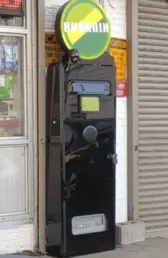
BudKoin Smart Vending Machine Jersey Airport Deployment
Vending machine deployment at Jersey Airport needed reliable cashless payment processing with cloud reporting, in a high-traffic transit environment where downtime equals lost transactions and customer frustration. Required Raspberry Pi-based hardware integration with a blockchain payment backend, real-time inventory tracking, and remote diagnostics.
Custom Raspberry Pi-based controller with MDB protocol integration for hardware dispensing, a PyTorch-driven interactive display, and blockchain payment processing via QR-based web ordering. Backend dashboard for real-time order monitoring, inventory thresholds, and remote diagnostics. Continuous operation since March 2025 with maintenance partnership.
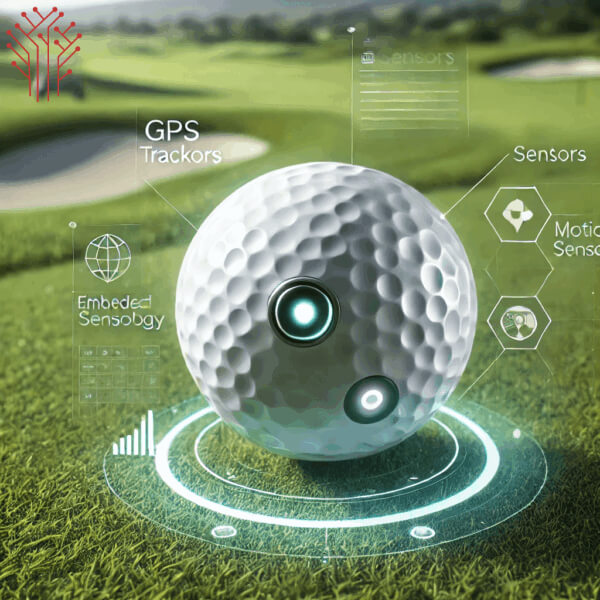
Smart Golf Ball BLE Sensor + Companion App
Consumer-grade connected sports device for outdoor use — required reliable BLE connectivity at sport distances, multi-month battery life on a single charge, accurate motion sensing for shot tracking, and a form factor that survives real golf use. Hardware had to ship at consumer-product quality, not prototype quality.
Compact BLE-enabled sensor with optimized power management for multi-month operation, accelerometer and custom firmware for shot detection, and companion mobile app for data sync. Production engineering iterated through 40+ board revisions to reach consumer-ready hardware — methodical iteration is what real production engineering looks like.
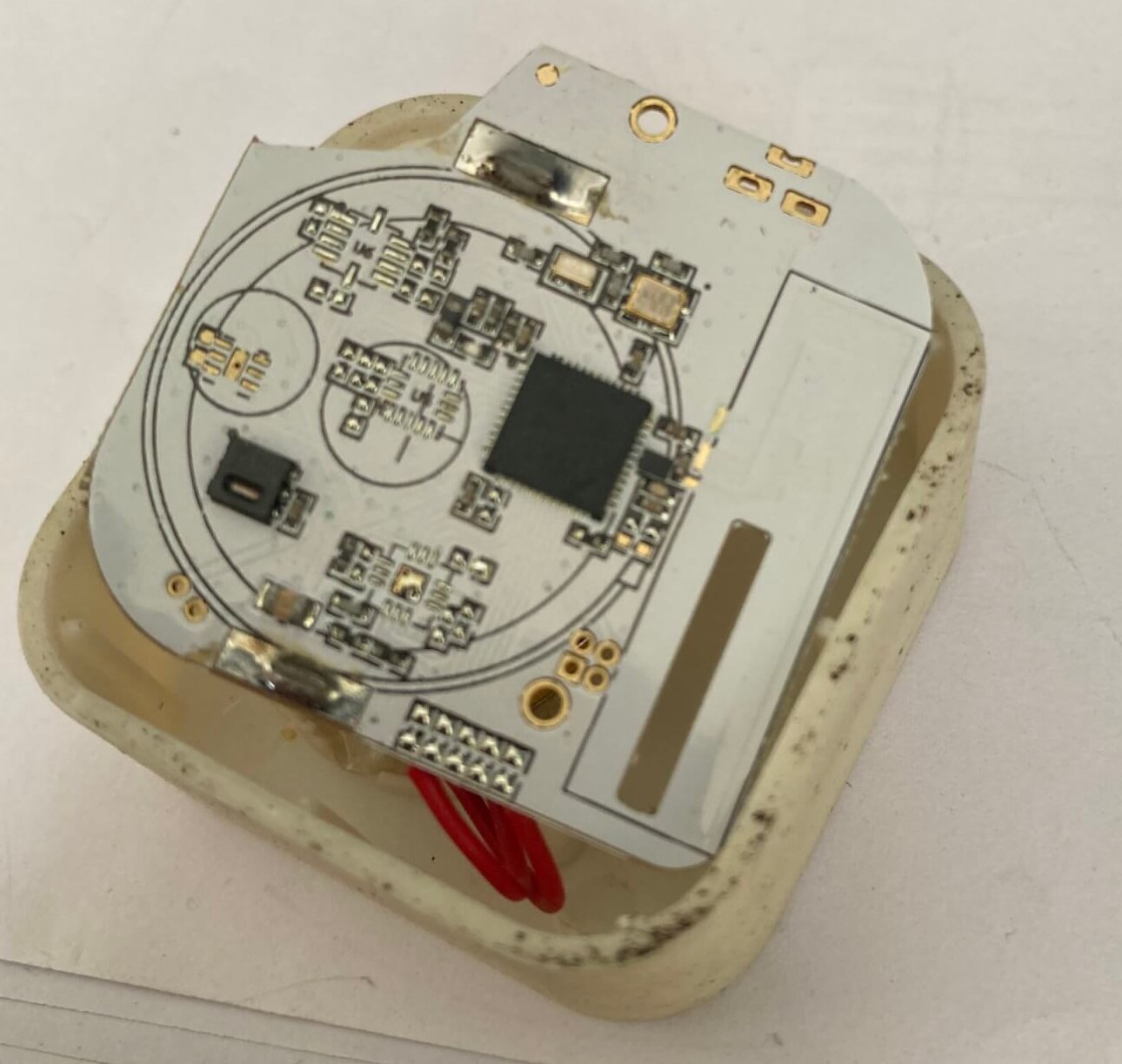
Cold Storage Monitoring Matter Protocol + BLE Mesh
Cold storage facilities need continuous temperature monitoring with reliable alerting before product loss occurs. Most existing cold storage monitoring uses proprietary protocols that lock facilities into single-vendor ecosystems. Required a modern, standards-based monitoring system that could scale to facility-specific node counts and integrate with existing operations.
BLE Mesh sensor network with Matter protocol cloud integration — one of the first cold chain applications of Matter. Mesh architecture lets facilities scale to whatever node count their layout requires. Sub-3-second alert latency on temperature deviations. Tested with two pilot deployments to validate the architecture before broader rollout.
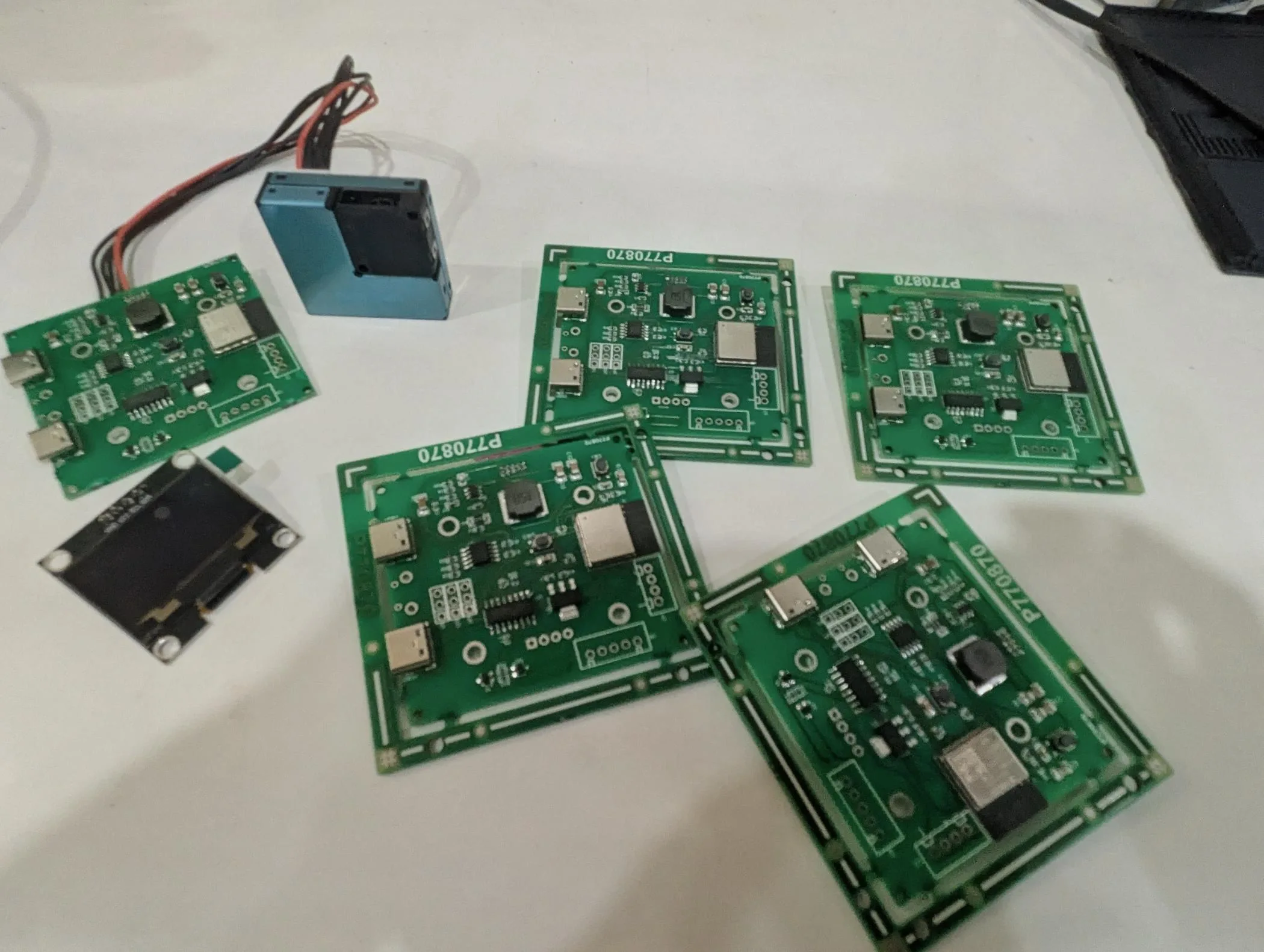
ESP32-C3 Air Quality Monitor Multi-Sensor Custom PCB
Indoor air quality monitoring requires multi-parameter sensing (particulate matter, CO2, volatile organics) in a compact, low-power device with reliable cloud connectivity and easy user setup. Most existing monitors specialize in single parameters or use bulky reference-grade sensors. Required production-ready prototypes for client evaluation before scale-up commitment.
Compact ESP32-C3 board integrating PM2.5, CO2, and VOC sensors with BLE provisioning for easy WiFi setup and cloud telemetry. Power-optimized firmware for continuous monitoring. Prototype boards delivered for client validation — client subsequently placed a production order after evaluation, validating the design for scale-up.
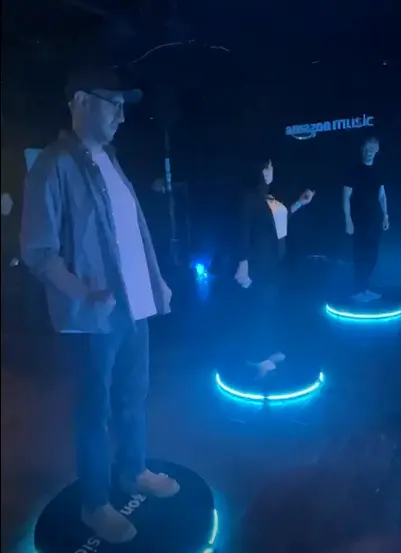
Interactive Music Floor Pressure-Sensing Mats + Beat-Synced Lighting
An event agency needed an activation booth people would actually stop and play with, not another photo backdrop — a floor you could make music with. There was no prior product to copy and no reference hardware, just a concept and a deadline, and it had to survive a night of people stomping on it in a dark, crowded venue.
Three custom-built wooden mats, each housing a load cell and HX711 amplifier wired to its own ESP32, with a Raspberry Pi running as the central brain — holding the show's music, tracking the beat in real time, and coordinating all three mats over a wireless link. Two signal paths run independently: pressure crossing a per-mat threshold triggers that mat's song layer, while the Pi's beat-detection engine drives a separate LED ring, keeping the hardware simple and avoiding fragile touch-to-beat synchronization.
Flexible Engagement Models
Whether you need one engineer or a full product team, we have a model that fits — no lock-ins, no bloated contracts.
Dedicated IoT Developers
Extend your team with experienced engineers
Teams that need extra firepower without the overhead of hiring. Hire 1–5 engineers who embed into your workflow.
End-to-End Project
From idea to deployed IoT product
Founders and enterprises who want one accountable team to own the full build — hardware, firmware, cloud, and apps.
MVP Development
Validate your IoT idea fast
Startups and innovators who need a working IoT prototype in 4–6 weeks to test, pitch, or raise funding.
Got a $1K–$7K Budget
and a Big Idea?
A $1K–$7K budget is real IoT money — if you're honest about scope. A first working prototype on a chosen platform (ESP32, nRF52, Arduino) with firmware for the core use case is achievable. Basic cloud telemetry — a simple dashboard where you can see device data — usually fits too. A full mobile app companion is typically a stretch at this range; a lightweight web dashboard is more realistic. Custom PCB design moves to the next tier; at this stage, dev boards and off-the-shelf modules are the right call.
This budget is for validation — getting something real to hold and test before raising a seed round, showing investors a working device instead of slides, demoing to early customers to confirm the problem is worth solving. The case for spending $1.5K on real hardware over $0 on speculation isn't complicated: hardware investors and early customers respond differently to something they can pick up. A working prototype changes the conversation.
In this range, we've built wearable sensor prototypes that monitor motion and transmit to a cloud dashboard, BLE-enabled consumer hardware MVPs, ESP32-based monitoring systems for early customer demos, and custom controllers for niche automation use cases. The through-line: each had one clear, minimal function — not a full product, but enough to prove the concept and de-risk the next investment decision.
Our IoT Development Process
A clear, battle-tested process — so you always know what's happening, what's next, and what you're getting at every stage. For the full phase breakdown and real timelines, read our guide to IoT product development: from idea to MVP in 90 days.
Requirement Analysis
We deep-dive into your idea, use case, and constraints — understanding what the device needs to do, who uses it, and what the environment looks like. NDA signed before this call.
Architecture & Planning
We define the complete system architecture — hardware selection, firmware stack, connectivity protocols, cloud platform, and data flow — before a single line of code is written.
Prototype Development
From breadboard to working prototype — firmware, sensors, connectivity, and a basic cloud connection. You get something real to hold, test, and show stakeholders or investors.
Testing & Iteration
Real-world stress testing across edge cases, power cycles, network interruptions, and environmental conditions. We fix, refine, and iterate until the system performs reliably — not just in the lab.
Deployment & Scaling
We deploy to production, set up OTA update pipelines, configure monitoring dashboards, and hand over full documentation — so your team can run and scale the system independently.
Frequently Asked Questions
Everything you need to know about working with a full-stack IoT development company — answered honestly.
Looking for an IoT Development Partner Who Builds the Whole Device?
We build connected devices end-to-end — PCB layout, embedded firmware, wireless stack, cloud backend, and the app your users interact with. Eight years. 80+ shipped products. 15+ industries. One team owns the whole thing from first conversation to live deployment — no integration gaps, no handoff breakage, no vendor blame game. Most IoT vendors are software-only. We build the actual device. If you're starting a connected hardware project, start the conversation here.