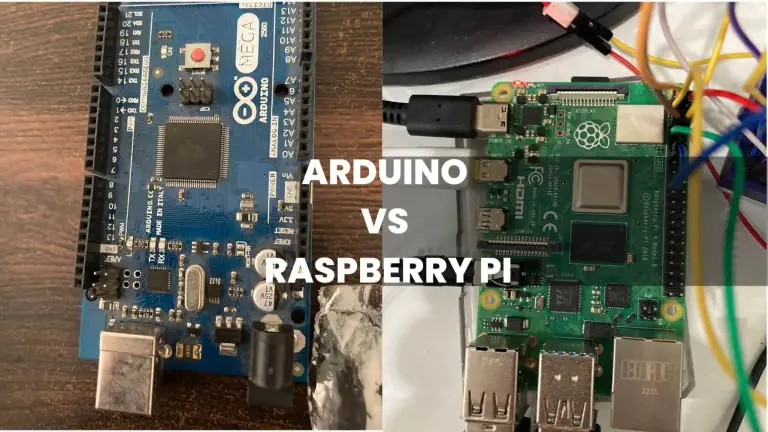
How Arduino and Raspberry Pi Work Together in Hybrid IoT Solutions
When IoT (Internet of Things) started gaining popularity a decade ago, most developers faced a simple choice: Arduino for hardware control or Raspberry Pi for computing power. In 2025, this choice has evolved into a new standard — using both together in hybrid IoT systems.
But why combine them? Because Arduino and Raspberry Pi are not competitors. They are complementary technologies: one acts as the “muscle” (controlling real-time devices), while the other serves as the “brain” (processing data, running AI, and connecting to the cloud). This blog explores how these two platforms collaborate, the industries adopting hybrid models, and why this combination represents the future of IoT.
Evolution of Arduino and Raspberry Pi in IoT
- Arduino (2005–2010): Initially built for students and hobbyists, Arduino quickly became the go-to board for simple sensors, motors, and automation projects. It was cheap, easy to program, and reliable for repetitive tasks.
- Raspberry Pi (2012 onwards): Introduced as a low-cost computer for education, Raspberry Pi turned into a favorite for IoT developers who needed full operating systems, internet connectivity, and multimedia handling.
- 2020s Hybrid Era: As IoT solutions demanded both low-power real-time control and high-level analytics, projects began merging Arduino and Raspberry Pi. The hybrid model is now widely used in smart retail, agriculture, healthcare, and industrial automation.
⚡ Looking to Build a Smart IoT Product?
Hybrid Architecture: Arduino as the Muscle, Raspberry Pi as the Brain
Think of a human body analogy:
- Arduino (the muscle):
- Collects raw data from sensors
- Controls actuators (motors, relays, lights)
- Executes tasks instantly without lag
- Raspberry Pi (the brain):
- Processes large datasets
- Runs Python scripts, databases, or even AI models
- Connects to cloud servers and user dashboards
- 📊 Hybrid Workflow Example:
- Arduino detects temperature via a sensor.
- Data is sent to Raspberry Pi via I²C.
- Raspberry Pi analyzes the data, predicts energy usage trends, and updates a cloud dashboard.
- User receives alerts on a smartphone app.
This layered architecture ensures accuracy at the edge and intelligence at the core.
How Arduino and Raspberry Pi Communicate (Protocols in Practice)
For a hybrid IoT system to work seamlessly, Arduino and Raspberry Pi need a reliable way to exchange information. There are multiple communication methods available, and each has its own best-fit scenario.
- Serial (USB Communication): This is the simplest way to connect Arduino directly with Raspberry Pi. It’s often used in prototyping, debugging, and projects where speed is not critical but ease of use is important.
- I²C (Inter-Integrated Circuit): Ideal for connecting multiple devices to a single Raspberry Pi. With I²C, you can have several Arduinos acting as sensor nodes, all sending their data back to one Raspberry Pi hub for centralized processing.
- SPI (Serial Peripheral Interface): A faster protocol compared to I²C. SPI is commonly chosen when the project requires rapid data transfer, such as in robotics or real-time automation systems where timing is critical.
- MQTT (Message Queuing Telemetry Transport): A lightweight messaging protocol widely used in IoT. Instead of direct wiring, devices communicate through a broker (local or cloud-based). This makes MQTT perfect for smart vending machines, home automation, and large distributed IoT networks.
- Wi-Fi or Bluetooth: When physical wiring is not possible, wireless methods come into play. Arduino boards with Wi-Fi or Bluetooth modules can send sensor data to a Raspberry Pi, which then processes it or relays it to the cloud. This is commonly seen in smart home projects and mobile IoT devices.
In short, the choice of protocol depends on the nature of the project. For quick testing, serial USB works best. For multi-sensor systems, I²C is preferred. If speed is critical, SPI takes the lead. For scalable IoT with cloud connectivity, MQTT is the go-to option, while Wi-Fi and Bluetooth are perfect for wireless flexibility.
Industry Applications of Hybrid IoT
Smart Retail – The Rise of Intelligent Vending
A custom vending machine can’t rely on just one board.
Arduino handles inventory detection, motor control, and sensors.
Raspberry Pi manages cashless payments, cloud dashboards, and AI-driven recommendations.
This combination allows real-time sales tracking, reduced downtime, and smart retail solutions that adapt to customer behavior.
Agriculture – Precision Farming
Arduino: Measures soil moisture, pH, and temperature with accuracy.
Raspberry Pi: Uses ML models to analyze trends and sends irrigation schedules to farmers.
This hybrid model supports sustainable farming with resource optimization and predictive analytics.
Healthcare – Remote Patient Monitoring
Arduino: Collects vital signs like ECG, SpO₂, and heart rate.
Raspberry Pi: Stores records, integrates with hospital servers, and enables doctors to view real-time dashboards.
Hybrid IoT ensures faster decisions in telemedicine and remote patient monitoring.
Industrial Automation – Industry 4.0 Backbone
Arduino: Controls factory equipment, conveyor belts, and environmental sensors.
Raspberry Pi: Analyzes data for predictive maintenance, integrates with ERP systems, and enables AI-driven efficiency improvements.
This balance allows industries to automate at scale while keeping costs down.
🔧 Prototype Faster, Scale Smarter
Market Trends and Research Data
- According to Statista, the number of connected IoT devices is projected to reach 29.4 billion by 2030, and hybrid boards are a big part of this growth.
- Raspberry Pi Foundation reported 50 million units sold globally by 2024.
- Arduino boards continue to dominate the educational and prototyping space, with over 10 million boards shipped annually.
- In smart agriculture, hybrid IoT adoption has grown by 65% since 2020, largely due to affordable sensor-computer combinations.
These stats show that businesses are moving beyond hobbyist use cases into scalable IoT deployments, where hybrid solutions shine.
Myths vs Reality in Hybrid IoT
- Myth 1: Raspberry Pi replaces Arduino. Reality: Pi can’t handle real-time sensor control as efficiently as Arduino. They complement, not compete
- Myth 2: Arduino can’t do AI. Reality: With TinyML, Arduino can run small AI models for anomaly detection, gesture recognition, or predictive sensing.
- Myth 3: Hybrid systems are too complex for startups. Reality: With the right embedded software development services, startups can rapidly prototype hybrid systems at a low cost.
How DigitalMonk Helps Build Hybrid IoT Solutions
At DigitalMonk, we specialize in merging Arduino and Raspberry Pi into production-ready IoT products. Our expertise includes:
- Embedded Software Development Services for secure hardware integration
- custom vending machine solution for smart retail
- Ai chatbot development linked with IoT devices for customer support
- Web Development Services for cloud dashboards and mobile apps
- Helping businesses hire Raspberry Pi developers for end-to-end IoT innovation
Whether you’re building a smart city project, a healthcare device, or an industrial automation solution, we provide scalable hybrid IoT development tailored to your business.
Conclusion
The debate between Arduino vs Raspberry Pi is outdated. Modern IoT projects thrive when both work together in hybrid architectures. By combining Arduino’s real-time precision with Raspberry Pi’s computing power, businesses unlock powerful solutions for retail, healthcare, agriculture, and industry.
For startups and enterprises, the opportunity lies not in choosing one board but in designing holistic hybrid systems — and with partners like DigitalMonk, these projects can move from prototype to production with confidence.
🚀 Turn Your IoT Idea into reality with Arduino + Raspberry Pi Hybrid Solutions.
Frequently Asked Questions (FAQ)
Because each serves a different purpose: Arduino is excellent for real-time sensor control, while Raspberry Pi is powerful for data processing, cloud connectivity, and AI. Together, they deliver a complete IoT solution.
Yes. Many industries, from retail to healthcare, already use hybrid systems in production. With the right embedded software development services, they can scale from prototype to enterprise deployment.
It depends on your project. Serial USB is great for prototyping, I²C for multi-device setups, SPI for speed, MQTT for IoT networks, and Wi-Fi/Bluetooth for wireless flexibility.
Costs vary depending on hardware, cloud integration, and custom software. Arduino boards are low-cost, Raspberry Pi is affordable, and the main investment is in software development and scaling.
Yes. We offer embedded software development, Raspberry Pi prototyping, AI chatbot integration, web dashboards, and smart vending machine solutions—all tailored to your business needs.