
Why a Fully Equipped Arduino Lab Matters When Hiring Remote Developers
When businesses hire an Arduino programmer or developer, they often focus only on coding skills and rates. But embedded systems require hardware testing, real-world validation, and electrical reliability — not just software expertise. Arduino projects involve sensors, motors, relays, and power systems. Without access to a fully equipped lab, remote developers can’t properly test hardware. If you plan to hire remote Arduino developers, lab infrastructure is as important as programming skills.
Remote Arduino Development: The Hardware Risk
It’s easy to assume that Arduino work can be done remotely with:
- Tinkercad simulations
- Wokwi virtual boards
- Basic local breadboard setups
But real-world embedded systems behave very differently compared to simulators.
- A relay module behaves differently under inductive load.
- A GSM module drops connection under low voltage.
- A sensor gives noisy readings in real environmental conditions.
- EMI affects signal stability.
- Power fluctuations reset microcontrollers unexpectedly.
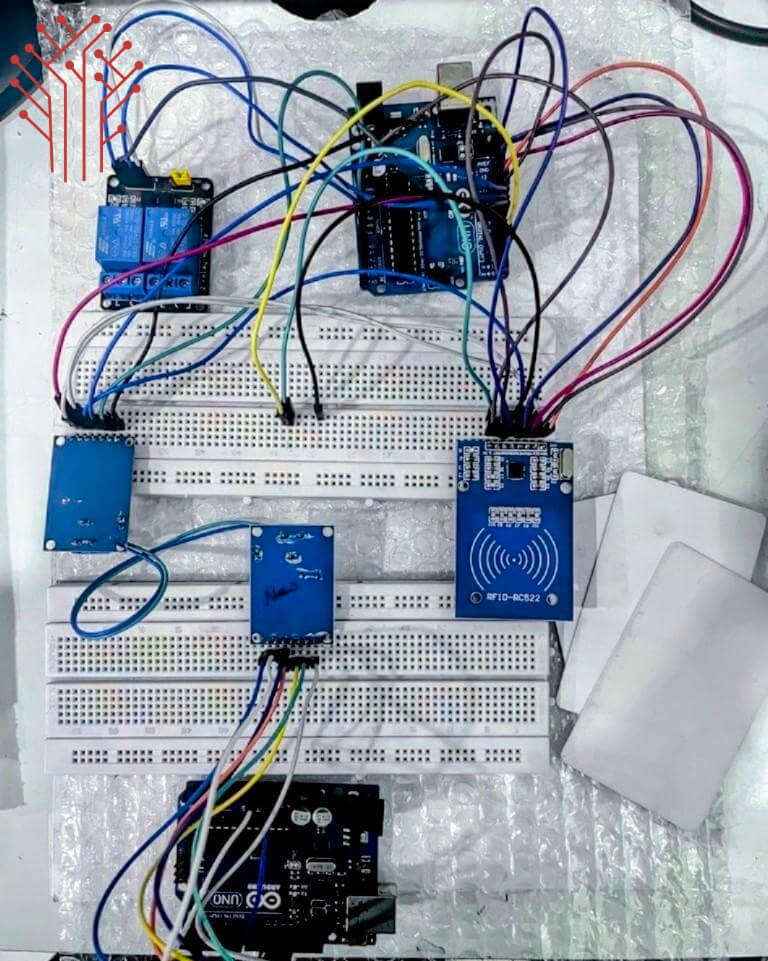
A developer working only in simulation cannot identify these issues before deployment.
That’s why companies looking to hire Arduino developer for commercial projects must ensure the team has physical hardware access and testing capabilities.
What Is a Fully Equipped Arduino Lab?
A professional Arduino lab is not just a desk with a board and USB cable. It is an industrial-grade testing environment.
Multiple Arduino Boards
Testing across various architectures to ensure platform compatibility.
- • Arduino Uno, Nano, Mega
- • ESP32-based boards
- • Custom Arduino-compatible PCBs
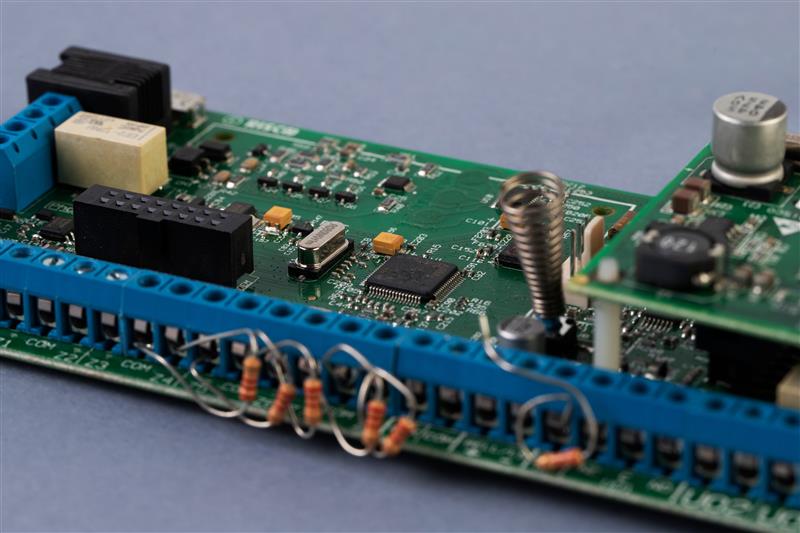
Sensor & Actuator Library
Real-world testing against physical components, not just simulators.
- • Temp, Humidity, Gas, Pressure
- • RFID, NFC, GSM, LoRa Modules
- • Industrial-grade I/O & Motors
Power Infrastructure
Eliminating the #1 cause of field failure: power instability.
- • Variable DC Power Supplies
- • Battery & Load Testing
- • Surge & Noise Simulation
Debugging Tools
Catching timing issues and signal noise simulators can't detect.
- • Digital Oscilloscope & Logic Analyzer
- • Precision Multimeter
- • Serial Debugging Tools
Why It Matters for
Commercial Projects
When transitioning from a prototype to a market-ready product, stability isn't just a feature—it's a requirement. Reliability is critical across these sectors:
50% Code + 50% Validation
Remote code is only half the battle. Hardware validation in a controlled lab is the other half.
When you hire Arduino programmer without verifying lab access, you may face:
Hiring a developer without verified hardware testing infrastructure leads to:
- Field device crashes
- Random hardware resets
- Communication failures
- Hardware incompatibility
- Expensive product recalls
Remote code is easy. Hardware validation is not. Work with developers who test on real boards — not simulators.
Simulation vs Real-World Testing
The difference becomes visible during deployment, where failures are most expensive.
| Testing Feature | Simulation-Only | Lab-Backed Team |
|---|---|---|
| Testing Environment | Tests in browser simulator | Tests on physical boards |
| Power Logic | Assumes perfect power | Tests voltage fluctuations |
| Sensor Accuracy | Ideal sensor values | Real noisy sensor data |
| Signal Integrity | No EMI testing | Real interference handling |
| Mechanical Stress | No load testing | Tests with motors & relays |
Faster Iteration with Lab Access
Many businesses think remote teams are slower. That’s only true when hardware testing is not available. By eliminating the need to ship physical components back and forth, we compress months of development into weeks.
"Instead of shipping hardware back and forth, our engineers test, modify, and validate in-house. This reduces turnaround time significantly."
Avoid expensive field failures. Choose a remote team that prototypes, tests, and debugs in a fully equipped lab.
Reduced Production Risk
When you prepare for mass production, small firmware mistakes can cause large-scale failures.
Common production-stage issues:
- ✕ Memory overflow
- ✕ Pin conflicts
- ✕ Bootloader errors
- ✕ PCB revision mismatches
- ✕ Timing instability
Firmware Validation:
- ✓ Different PCB versions
- ✓ Multiple power conditions
- ✓ Extended runtime testing (burn-in testing)
Long-Term Reliability Testing
Professional Arduino labs perform validations that simulation-only developers usually skip.
Lab Valdiations:
- • 24–72 hour continuous run tests
- • Temperature stress testing
- • Communication stress tests
- • Sensor drift validation
These tests reduce:
- • Customer complaints
- • Warranty claims
- • Field technician visits
Final Insight: If you're planning to scale your product, always hire Arduino developer with infrastructure — not just experience. When companies hire remote Arduino developers without lab access, these critical validations are usually skipped.
Real lab access means faster iteration, fewer surprises, and smoother production rollout.
A lab-backed team signals maturity.
When you hire Arduino programmer for critical projects, you are not just buying code — you are investing in product reliability.
- Commitment to hardware excellence
- Structured testing process
- Engineering discipline
- Production readiness
ESSENTIAL FOR:
Cost of NOT Having a Lab
Choosing a low-cost freelancer without lab access might save money initially. But long term, it can cost:
- Re-design expenses
- Shipping defective devices
- Support escalations
- Lost brand credibility
Not just remote developers — a complete Arduino development environment with testing infrastructure.
Final Thoughts
When you decide to hire an Arduino programmer, developer, or remote team...
- “What projects have you done?”
- “What is your hourly rate?”
- Do you have a hardware lab?
- What boards do you test on?
- How do you validate power stability?
- Do you perform stress testing?
In embedded development, real-world validation separates hobby projects from production-ready systems. If your project involves real hardware, real customers, and real deployment — make sure your development partner works in a real lab.
That’s the difference between a working prototype and a reliable product.