Cost of Embedded Software
Development 2026
Embedded software is no longer just firmware — it's the intelligence behind IoT devices, industrial automation, wearables, smart appliances, and connected infrastructure. As hardware becomes commoditized, software complexity (and cost) is where most engineering effort lies.
Why Embedded Software Costs More Than You Expect
If you're planning a product, budgeting embedded software development correctly can be the difference between shipping fast — or burning months and capital. Unlike web or mobile apps, embedded development has no reusable scaffolding. Every project starts from a hardware-specific baseline.
The stack is complex: RTOS selection, peripheral driver development, power optimization, over-the-air update mechanisms, hardware-software co-design — each layer adds cost that isn't visible on a typical project brief.
This guide breaks down real 2026 cost structures, regional pricing, project-based estimates, and where you should (and shouldn't) optimize cost. Whether you're a startup founder scoping your first hardware product or a CTO evaluating outsourcing options, the numbers here are grounded in real project data.
What This Guide Covers
A complete embedded software cost reference for 2026
- What drives embedded software cost in 2026
- Hourly rates by region — US, Europe, India
- Project-type cost estimates with real ranges
- Fixed-price vs. time & material: which to choose
- Where you can cut costs without sacrificing quality
- Red flags that signal an underpriced proposal
- How DigitalMonk approaches project pricing
What Does Embedded Software Development Actually Cost in 2026?
At a high level, embedded software development cost depends on a set of technical factors that compound each other. Understanding these drivers before you scope a project is the fastest way to build a realistic budget.
System Complexity
Bare-metal vs RTOS vs full Linux — each tier adds architecture decisions, porting effort, and testing surface area.
Hardware Integration Level
Custom PCB, peripheral drivers, sensor fusion, ADC calibration — deeper hardware ties mean longer dev cycles.
Connectivity Stack
BLE, Wi-Fi, LTE, Matter, Thread — each protocol adds stack integration, provisioning flows, and certification overhead.
Real-Time Constraints
Hard real-time systems (motor control, safety interlocks) demand deterministic code paths and rigorous validation.
Safety & Compliance
IEC 62443, FDA pre-market, CE, FCC, UL — compliance engineering is a cost multiplier most first-time founders underestimate.
Update & Maintenance Architecture
OTA firmware update systems, rollback logic, field diagnostics — essential for any shipped product, rarely scoped upfront.
Typical Cost Ranges (2026)
Based on real project scopes — not theoretical estimates| Project Type | Complexity | Estimated Cost |
|---|---|---|
Simple Firmware Sensor-based, bare-metal, no UI, single MCU | Low | $1,000 – $5,000 |
Moderate IoT System Connectivity + cloud integration, basic RTOS | Medium | $5,000 – $12,000 |
Complex Embedded System RTOS or Linux + backend, multi-peripheral, OTA | High | $12,000 – $40,000+ |
Enterprise-Grade Embedded Platform Compliance, fleet management, multi-device, safety-critical | Enterprise | $40,000 – $1M+ |
Key Cost Factors in Embedded Software Development
🔧Hardware Complexity
The silicon your firmware runs on sets the baseline for everything. A simple MCU project and a multi-core SoC with Linux are fundamentally different engineering undertakings.
⏱️Real-Time Requirements
Real-time constraints are a cost multiplier that scales exponentially, not linearly. The tighter the timing requirements, the more validation work is required.
📡Connectivity Stack
Adding wireless stacks increases both development and testing cost. Each protocol brings its own provisioning flows, power trade-offs, and certification overhead.
☁️Firmware + Cloud Integration
If your device connects to a backend, you're not just building firmware — you're building a distributed system. Cloud integration is frequently scoped as an afterthought and then repriced mid-project.
🛡️Compliance & Certification Hidden multiplier
Industries like healthcare, automotive, and fintech devices carry regulatory overhead that many first-time founders budget as zero — until they hit a submission wall.
👥Team Composition
A production-ready embedded product rarely ships with a single engineer. The more cross-functional the team, the higher the cost — but also the higher the probability of actually shipping.
Not sure which factors apply to your project?
We scope embedded projects daily — hardware, firmware, cloud, and compliance all in one conversation. No agency layers, no guesswork.
Cost Breakdown by Project Components
Budget Allocation — Typical Embedded Project
Firmware Development
Core logic, peripheral drivers, RTOS integration, power management
Cloud / Backend
APIs, device management, OTA pipeline, dashboards, data storage
Hardware Integration
Schematic review, driver development, bring-up, signal validation
Testing & QA
Unit tests, hardware-in-loop testing, field simulation, regression
Project Management
Sprints, reporting, client coordination, documentation, handover
Budget Share at a Glance
Embedded Development Hourly Rates (2026)
Where you hire matters as much as who you hire. Here's where geography becomes critical — the same senior embedded engineer costs 3–4× more in the US than in India, and 1.5–2× more than Eastern Europe.
- Junior$65–$90/hr
- Mid-Level$85–$120/hr
- Senior$120–$180+/hr
- Junior$55–$75/hr
- Mid-Level$70–$100/hr
- Senior$90–$130/hr
- Junior$25–$40/hr
- Mid-Level$40–$65/hr
- Senior$65–$90/hr
- Junior$15–$25/hr
- Mid-Level$25–$45/hr
- Senior$40–$65/hr
Global Hourly Rates Comparison
2026 benchmarks — software development rates| Region | Junior | Mid-Level | Senior |
|---|---|---|---|
🇺🇸USA | $65–$90 | $85–$120 | $120–$180+ |
🇪🇺Western Europe | $55–$75 | $70–$100 | $90–$130 |
🌍Eastern Europe | $25–$40 | $40–$65 | $65–$90 |
🇮🇳India | $15–$25 | $25–$45 | $40–$65 |
DigitalMonk is India-headquartered — with offices in the US and UK.
You get India-tier pricing with engineers who have shipped hardware to Jersey Airport, European retailers, and North American gyms. No timezone surprises, no quality compromise.
India vs US vs Europe — Strategic Comparison

India
Best cost-to-output ratio
United States
Highest cost, highest spec
Europe
Strong quality, high costSide-by-Side Breakdown
All factors at a glance| Factor | 🇮🇳 India | 🇺🇸 USA | 🇪🇺 Europe |
|---|---|---|---|
💰Cost | Very Low | Very High | High |
👥Talent Pool | Large | Specialized | Strong |
💬Communication | Good | Excellent | Excellent |
⚡Speed | Fast* | Moderate | Moderate |
💡Innovation | Growing | Leading | Strong |
India offers the best cost-to-output ratio — but execution matters.
The cost advantage is real and significant. The variable is project management quality. With strong sprint discipline, clear documentation, and a firm scoping process upfront, an India-based embedded team consistently outperforms higher-cost alternatives on delivery speed and total project value. *Speed rating assumes well-managed engagement.
Cost by Project Type
Abstract ranges only go so far. Here's how budgets actually break down across three real embedded project archetypes — line item by line item.
Smart IoT Device
- Firmware$1k – $3k
- Mobile App$1k – $5k
- Backend$2k – $4k
Industrial Monitoring System
- Firmware + RTOS$4k – $12k
- Cloud Dashboard$4k – $10k
- Integration$2k – $8k
Linux-Based Embedded System
- BSP + Drivers$5k – $15k
- UI + Middleware$4k – $12k
- Cloud + APIs$1k – $2k
Budget Composition — Visual Comparison
Real Case Studies — Cost in Context
Abstract cost ranges mean more when you see what actually gets built. Here are two shipped DigitalMonk projects with the technical scope that drives their price point.
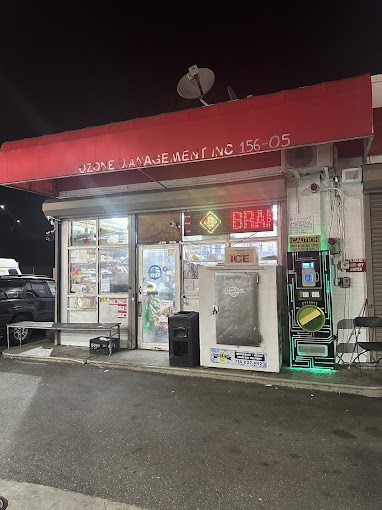
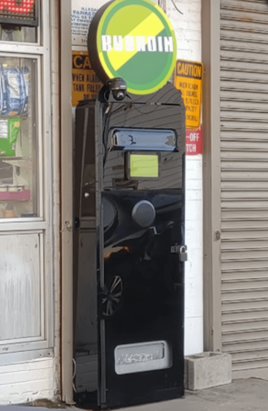
Smart Vending Machine — Budkoin
A blockchain-powered connected vending system built on Raspberry Pi. Users scan a QR code, select products via a web interface, pay via Budkoin's platform, and receive an order ID to authenticate dispensing on the machine — all handled through MDB protocol integration and a PyTorch-based interactive UI.
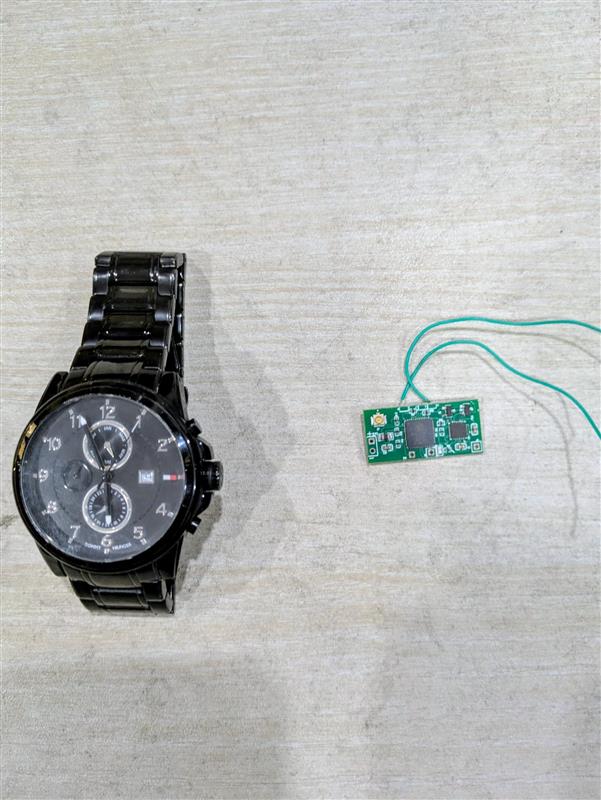
Low-Power nRF Wearable — Sports Tracking
A compact, coin-cell powered wearable built on the nRF platform for sprint timing and long jump analysis. The primary engineering challenge wasn't the tracking — it was achieving accurate athletic data collection across a full training session on a coin cell. Event-driven firmware, IMU-interrupt-based wake cycles, and tightly controlled BLE transmission windows make this a real power engineering problem.
Have a similar project in mind?
We scope and build embedded systems from bare-metal firmware to cloud-connected platforms. NDA signed before discussion — your idea stays yours.
Budgeting Tips That Actually Work
Most cost overruns in embedded projects are predictable — and preventable. These are the five budgeting principles that separate projects that ship from projects that stall.
Don't Optimize for Hourly Rate
Cheaper developers can increase your total project cost significantly. A $15/hr developer who ships broken firmware costs more than a $45/hr developer who ships it right the first time.
Define Scope Clearly Before You Start
Ambiguity is the fastest path to budget explosion. A vague brief invites scope creep, misaligned expectations, and costly mid-project pivots.
Defines what the product does — and what it doesn't
MCU, sensors, connectivity, power constraints
Must-have vs. nice-to-have — before code starts
Start with an MVP — Ship, Then Expand
Don't try to build the complete product in the first sprint. Ship the core system, validate it in the real world, then layer in complexity. This approach reduces financial risk and produces better products.
Choose the Right Engagement Model
The contract structure affects cost predictability as much as the hourly rate does. Match the model to the nature of your project.
| Model | When to Use |
|---|---|
| Fixed Price | Well-defined scope with clear deliverables |
| Hourly / T&M | R&D, exploratory work, or evolving product |
| Dedicated Team | Long-term product with ongoing development |
Always Budget a 20–30% Iteration Buffer
Embedded products always need revisions after real-world testing. Hardware behaves differently in the field than on the bench. Budget for it upfront — not as an afterthought.
The Short Version — 5 Rules to Budget By
When You Should Spend More — And Not Cut Corners
Not every line item is worth optimizing. In embedded development, cutting cost in the wrong places doesn't save money — it defers it, with interest. These four areas are where the investment always pays off.
Security
⚠️ Cutting cost here is recklessIf your device touches sensitive user data, financial transactions, or remote actuation — security is not an optional line item. A compromised device doesn't just hurt the end user. It destroys the product and the brand.
Architecture
Bad arch = rewrite in 12 monthsPoor architectural decisions compound over time. What looks like a cost saving in Sprint 1 becomes a complete rewrite six months before your Series A. Invest in structure early — it's significantly cheaper than a rebuild.
Testing & Reliability
Field failures cost far more than dev testingEmbedded products operate in environments that no test bench fully replicates — temperature swings, RF interference, power fluctuations, and rough handling. Skimping on QA means the field becomes your test environment, at your customer's expense.
Hardware-Software Co-Design
Tight coupling demands experienced teamsTreating hardware and firmware as separate workstreams is one of the most expensive mistakes in embedded product development. When the PCB and the firmware aren't designed together, you pay for it in bring-up time, signal integrity issues, and driver rewrites.
Cost of Cutting Corners — By Area
What you actually pay when you skip investment| Area | Short-Term "Saving" | Actual Long-Term Cost | Risk Level |
|---|---|---|---|
🔐 Security | Skip pen testing, basic auth | Data breach, product recall, legal liability | Critical |
🏗️ Architecture | Fast scaffold, no modularity | Complete rewrite at scale — 3–10× original cost | Critical |
🧪 Testing & QA | Reduce QA sprint, ship faster | Field failures, support burden, reputation damage | High |
🔗 HW-SW Co-Design | Separate teams, no coordination | Bring-up delays, PCB respins, driver rewrites | High |
DigitalMonk handles all four — under one roof.
Hardware design, firmware engineering, cloud integration, and QA — no handoffs between agencies, no communication gaps between teams. One engagement, full-stack accountability.
When You Can Optimize Cost
Not every part of an embedded project deserves premium investment. These are the areas where lean spending is perfectly rational — and where an experienced team can help you move fast without risk.
Build In-House vs Outsource — A Cost Perspective
The decision to build in-house or outsource embedded development isn't purely about cost — it's about risk, speed, and what your team is actually equipped to execute. Here's how the three models compare.
Outsourcing can reduce costs by 30–60% — if executed correctly.
The savings are real. The condition is execution quality — which means choosing a partner with embedded-specific experience, clear scoping processes, and full-stack ownership from hardware through cloud. A generic software agency won't get you there.
DigitalMonk is the agency model — built specifically for embedded.
India-based rates, UK and US offices, senior engineers who have shipped to Jersey Airport, European retailers, and North American markets. Fixed-price or dedicated team — your choice.
Why Choosing the Right Partner Matters
A good embedded development partner doesn't just write firmware. They change the economics of your project — fewer hardware spins, less rework, and systems that scale from prototype to production without a redesign.
Reduce Hardware Iteration Cycles
Experienced engineers catch PCB issues before fab — not after. Every avoided respin saves weeks and thousands in prototype cost.
Optimize Power Consumption
Power engineering is a deep skill. The difference between a device that lasts 6 hours and 6 months on a battery is entirely in firmware and hardware architecture decisions.
Design Scalable Systems
From 10 units to 10,000 — the architecture needs to accommodate scale from day one. The right partner designs for where you're going, not just where you are.
Prevent Expensive Redesigns
Most redesigns are architectural decisions made too early or too cheaply. A strong partner front-loads the hard thinking so you don't pay for it later at 10× the cost.
Full-stack embedded partner — hardware through cloud.
We've shipped to Jersey Airport, European retailers, and North American markets. Real hardware, real constraints, real deadlines.
- Firmware, PCB, cloud — single engagement
- India-based rates, US & UK offices
- NDA signed before every discussion
- Fixed-price or dedicated team model
- Hardware on hand for faster prototyping
Final Takeaways
Cost Range: $5K to $400K+
Embedded software cost scales with system complexity — from a simple sensor node to a full enterprise-grade connected platform.
Geography Creates 3–5× Differences
A senior embedded engineer in the US runs $120–$180/hr. The same calibre in India runs $40–$65/hr. The output difference is management quality, not engineering quality.
The Biggest Cost Drivers
Three factors compound your costs more than any others:
Cheapest Option ≠ Most Cost-Effective
Low hourly rates introduce bugs, rework, and delays that cost more in total than paying market rate for experienced engineers who ship it right.
Architecture & Testing Save Money Long-Term
Investing in modular firmware architecture and thorough QA upfront consistently delivers a lower total project cost than the alternative — a rewrite.
Budget a 20–30% Iteration Buffer
Embedded products always reveal surprises in field testing. Build the buffer in before you start — not as an emergency line item when you're already over budget.
In 2026, embedded software is a
strategic investment — not a cost center.
Companies that treat embedded development as a cost to minimize struggle. Companies that treat it as a core product capability win. The hardware landscape is expanding — AI-driven tools are pushing more people into connected hardware products, and the demand for embedded expertise has never been higher.
If you're building something serious, budget accordingly — and choose partners who understand both hardware realities and software scalability. The scar tissue that comes from shipping real devices to real environments isn't something AI can replicate yet.