Low-Power nRF Wearable for
Sprint & Long Jump Analysis
A compact, coin-cell powered wearable built on the nRF platform — tracking sprint performance and long jump metrics in real time, synchronized to mobile via BLE. Engineering focus: ultra-low power consumption, intelligent sleep cycles, and reliable motion detection.
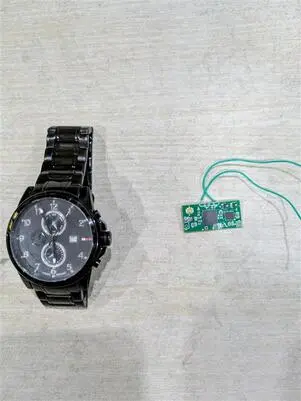
Custom PCB · Coin-Cell Form Factor


Overview
What We Built & Why It's Hard
We designed and developed a compact nRF-based wearable device capable of tracking sprint performance and long jump metrics, with real-time data synchronization to a mobile application via BLE.
Beyond tracking, the primary engineering focus was on power efficiency, sleep cycle optimization, and reliable motion detection — the core challenges in any wearable system. Getting accurate athletic data from a device that also needs to survive a full training session on a coin cell is a real constraint problem. Most off-the-shelf solutions don't solve this. We did.
Core Engineering Focus Areas
- ⚡Power EfficiencyAggressive duty cycling and peripheral management to minimize current draw during inactive periods.
- 💤Sleep Cycle OptimizationContext-aware sleep modes — device knows when an athlete is resting vs. in motion.
- 🏃Reliable Motion DetectionAccurate event triggering for sprint starts, jump takeoffs, and landings without false positives.
- 📱BLE Data SyncEfficient real-time data packets to mobile with minimal radio-on time.
Problem Statement
Why Most Wearables
Fail in the Field
Wearable devices often look good on a bench. The real test is a muddy track, a sweating athlete, and a battery that needs to last the session. Most fail before the finish line.
Poor Battery Life
Inefficient firmware that keeps peripherals active when they shouldn't be. Every unnecessary microsecond of MCU-on time is energy the device can't get back.
Continuous Sensing Drain
Always-on IMU and radio operation is the fastest path to a dead device. Without intelligent duty cycling, sensing becomes the enemy of endurance.
Noisy Motion Detection
Raw accelerometer data is chaotic. Without proper filtering and threshold tuning, the firmware fires on vibration, clothing rustle, and handling — not actual athletic events.
Bulky or Unstable PCB Design
Oversized layouts, poor antenna placement, and ground plane issues affect both form factor and RF performance — two things that can't be patched in firmware.
The goal was to build a practical, wearable-grade system — not just a lab prototype. Something that could survive real use, on a real athlete, across a real training session.
Our Approach
A Complete System —
Hardware, Firmware & BLE
We engineered a full-stack embedded solution using Nordic nRF architecture. Every layer — PCB, firmware, and wireless communication — was designed with the same constraint in mind: do more with less power.
Embedded Firmware
Event-driven. Not polling-driven.
Power Optimization
Every microamp accounted for.
Custom PCB Design
Built for the wrist, not the bench.
Key Features
What the Device Actually Does
Five capabilities. Each one earned through real engineering decisions — not checkboxes.
Sprint Timing Detection
Start and stop events captured via IMU interrupt thresholds — no manual triggering required. The firmware knows when the athlete moves and when they stop.
Long Jump Motion Analysis
Takeoff, flight, and landing phases distinguished from the raw IMU data stream. Filtered to ignore incidental movement and capture only meaningful athletic events.
BLE Mobile Connectivity
Real-time data sync to a companion mobile app over BLE 5.0. Connection parameters tuned to reduce radio-on time while maintaining responsive data delivery.
Optimized Sleep Cycles
Deep sleep during all inactive periods with wake-on-motion interrupt recovery. Extended battery life without sacrificing responsiveness when the athlete is ready to move.
Reliable Event Detection
Threshold tuning and filtering logic eliminate false triggers from handling, vibration, or ambient movement. The device fires on athletic intent — nothing else.
Core Engineering Highlight
Sleep Cycle &
Power Efficiency
The defining challenge in this project was achieving usable battery life without compromising accuracy. Most wearables pick one. We built a system that refuses to compromise on either.
Result: A wearable device that is practical for real usage — not just short test sessions in a lab.
Outcome
What Was Delivered
Three results that separated this from a prototype exercise.
What We Handled
Full-Stack Embedded Ownership
Every layer of this system was built in-house — no handoffs, no gaps. Our nRF developersown the complete stack from PCB to firmware to power optimization, as part of our broader sports tech product development work.
Building a wearable where battery life
and reliability actually matter?
Hire nRF developers who understand hardware, firmware, and power as one system — not three separate problems handed off between teams.