ESP32 vs STM32
vs nRF vs Raspberry Pi
Complete Comparison Guide
Choosing the right hardware platform is one of the most critical decisions in embedded product development. Whether you're building a smart vending machine, wearable, industrial controller, or edge AI system — this guide gives you the full picture.
What this guide covers
ESP32
Espressif · Dual-core 240MHz
STM32
STMicroelectronics · Cortex-M
nRF (Nordic)
Nordic Semi · Ultra-low power
Raspberry Pi
RPi Foundation · Full Linux
Quick Overview of Each Platform
Before diving into the numbers, here's what each platform fundamentally is — and why engineers reach for it.
Espressif ESP32
A highly integrated microcontroller with built-in Wi-Fi and Bluetooth, designed for connected devices. Dual-core processing up to 240 MHz with strong peripheral support.
STMicroelectronics STM32
A massive family of ARM Cortex-M microcontrollers known for precision, scalability, and reliability in production systems. The go-to for safety-critical applications.
Nordic nRF52 / nRF54
Optimized for Bluetooth Low Energy, making it ideal for battery-operated devices like wearables and sensors. The benchmark for coin-cell and energy-harvesting designs.
Raspberry Pi 4/5 / CM4
Not just a microcontroller — a full microprocessor system capable of running Linux and handling heavy workloads. The hub for edge AI, vision, and gateway applications.
Processing Power Comparison
Raw clock speed tells only part of the story. Architecture, instruction set, memory bandwidth, and OS overhead all determine what a chip can actually do in a real product.
Espressif ESP32
STMicroelectronics STM32
Nordic nRF52 / nRF54
Raspberry Pi 4 / 5
Processing Power — Verdict
Raspberry Pi
Unmatched compute — Linux, ML inference, video, and full application stacks
STM32
Deterministic timing, hard RTOS guarantees — essential for industrial control
ESP32
Enough compute for connectivity + TinyML at a fraction of the cost and complexity
nRF
Every µA matters — built for years of battery life without compromising BLE logic
Operating System Support
The software stack above the silicon determines your development speed, ecosystem access, and long-term maintainability. From bare-metal registers to full Linux distributions — each platform sits at a very different abstraction level.
Espressif ESP32
STM32
Nordic nRF52 / nRF54
Raspberry Pi 4 / 5
| Platform | Abstraction Level | Dev Speed | Debug Complexity | Production Maturity |
|---|---|---|---|---|
| ESP32 | Mid — RTOS + SDK | Fast | Moderate | High |
| STM32 | Low — Bare-metal / HAL | Slower | Complex | Excellent |
| nRF | Mid — SDK + Zephyr | Moderate | Moderate | High |
| Raspberry Pi | High — Full Linux | Fastest | Easiest | Context-dependent |
OS Support — Verdict
Raspberry Pi
Linux, Python, Docker — the complete application platform for edge computing
STM32
Bare-metal to Zephyr — deepest control for industrial and safety-critical firmware
ESP32
FreeRTOS + ESP-IDF makes connected product development fast without sacrificing depth
nRF
SoftDevice + Zephyr is the tightest BLE stack in the industry — certified and proven
Connectivity Comparison
Connectivity defines your product's communication architecture — and getting it wrong means expensive PCB respins. Here's the full picture of what's built in, what needs an external module, and what each platform does best.
| Platform | Wi-Fi | Bluetooth | Cellular | Other Interfaces |
|---|---|---|---|---|
ESP32 | Built-in | Classic + BLE | External | CANSPII2CUARTI2S |
STM32 | External | External | External | CANSPII2CUARTUSBLINFDCAN |
nRF | External | Best-in-Class | External | ThreadZigbeeMeshSPII2C |
Raspberry Pi | Built-in | Built-in | USB Modules | EthernetUSB 3.0GPIOHDMICSI/DSI |
ESP32 — Lower System Complexity
Built-in Wi-Fi and BT eliminates external RF modules, saving BOM cost, PCB space, and antenna tuning headaches.
STM32 — More Control, More Work
No built-in radio means you choose your RF module precisely — more flexibility, but also more integration complexity per design.
nRF — BLE Dominance
Nordic's SoftDevice and Zephyr BLE stack is the industry benchmark. Thread and Zigbee mesh extend its reach beyond point-to-point BLE.
Raspberry Pi — Supports Everything
Wi-Fi, BT, Ethernet, USB — all present, but at a power budget that makes battery-powered deployment impractical without careful management.
Connectivity — Verdict
ESP32
Wi-Fi + BT on one chip — the fastest path to a connected product without external RF modules
STM32
FDCAN, LIN, USB, multiple UART/SPI/I2C — unmatched industrial interface depth
nRF
Certified BLE 5.4, Thread, Zigbee mesh — the only choice when wireless performance defines your product
Raspberry Pi
Everything in one board — but power consumption means this flexibility comes with tradeoffs
Cost Comparison
Unit cost is only part of the picture. Total BOM cost, development time, certification overhead, and scalability pricing all factor into your real budget.
Espressif ESP32
Best value in the market for a connected MCU. Wi-Fi + BT built-in at under $5 in volume makes it nearly impossible to beat on BOM economics.
STMicroelectronics STM32
Widest pricing range of any family — entry-level Cortex-M0 parts under $2, advanced M7 DSP variants above $15. You pay exactly for what you need.
Nordic nRF52 / nRF54
Premium positioning is justified — no other chip delivers certified BLE 5.4 + sub-µA sleep + Zephyr stack at this integration level. Saves on certification costs downstream.
Raspberry Pi 4 / 5
Highest unit cost by far — but you're buying a full Linux computer. RPi Zero 2W at $15 to RPi 5 with 8GB RAM at $80. CM4 at $25+ is the route to production.
ESP32 — Best Price-to-Feature
Wi-Fi + BT + dual-core + peripherals for under $5. Nothing else comes close for connected IoT products.
STM32 — Scalable Pricing
Start cheap on M0, move to M7 as complexity demands. Same ecosystem, same toolchain, proportional cost.
nRF — Premium Justified
Higher unit cost offsets BLE certification, antenna design, and stack integration costs you'd pay elsewhere.
Raspberry Pi — Power at a Price
You're not buying a chip — you're buying a computer. CM4 is the production path; it gets more reasonable at scale.
Cost — Verdict
ESP32
Unbeatable price-to-feature ratio — the default choice when BOM cost is a constraint
STM32
Widest range — pay only for what your product actually needs across a unified ecosystem
nRF
Higher unit cost saves on certification and integration — total system cost is often lower
Raspberry Pi
Justified when your product genuinely needs Linux, ML, or high-bandwidth processing at the edge
Power Consumption
For battery-powered products, power is not a secondary concern — it is the constraint that defines everything else. Sleep current, wake latency, and duty cycle together determine whether your device lasts days or years on a single charge.
Espressif ESP32
STMicroelectronics STM32
Nordic nRF52 / nRF54
Raspberry Pi 4 / 5
| Platform | Active Current | Deep Sleep | Battery Deployment | Verdict |
|---|---|---|---|---|
| nRF | ~5–15 mA (BLE TX) | <1 µA | Coin cell — years | Best-in-Class |
| STM32 | ~1–100 mA (varies) | ~nA (L-series) | AA battery — months | Excellent |
| ESP32 | ~80–240 mA (Wi-Fi) | ~10 µA | Li-Po — days/weeks | Moderate |
| Raspberry Pi | 2,500–15,000 mA | No true sleep | Mains / large pack only | Not Suitable |
Power Consumption — Verdict
nRF
Sub-µA sleep, fast BLE wake — built from the ground up for years of battery operation
STM32
L-series nanoamp sleep with full peripheral flexibility — best choice when nRF's BLE focus isn't needed
ESP32
Deep sleep helps, but Wi-Fi radio draw makes it unsuitable for ultra-low-power coin-cell designs
Raspberry Pi
High continuous draw with no meaningful sleep state — battery deployment requires serious engineering compromise
When to Use Each Platform
Specs alone don't make the decision — project requirements do. Here's a direct guide to matching your product's actual needs to the right silicon, built from real project experience.
Use ESP32 When
- Wi-Fi and Bluetooth in a single, low-cost chip
- Fast prototyping with mature tooling and community
- BOM cost is a hard constraint on the project
- IoT or cloud connectivity is core to the product
Use STM32 When
- Hard real-time control with deterministic timing guarantees
- Industrial reliability and long product lifecycle support
- Precise peripherals — PWM, ADC, DAC, timers at µs accuracy
Use nRF When
- Maximum battery life — months or years on coin cell
- BLE is the primary and only communication protocol
- Small form factor — wearables, patches, implantables
Use Raspberry Pi When
- Full Linux OS — Docker, Python stack, package management
- UI, video output, camera input, or ML inference at the edge
- Heavy backend processing — aggregation, storage, dashboards
DigitalMonk Field Note
In practice, most mature products use hybrid architectures — an nRF or STM32 handling the time-critical sensor edge while a Raspberry Pi or ESP32 manages connectivity and cloud sync. We've shipped exactly this pattern in our smart vending machine at Jersey Airport (STM32 for dispense control + ESP32 for Wi-Fi telemetry) and our Smart Golf Ball (nRF52 for BLE mesh + IMU data). Choosing a single chip for everything is the exception, not the rule.
Use Case — Verdict
ESP32
Smart home, vending machines, cloud-connected devices — the default connected MCU
STM32
Robotics, motor drives, medical — when determinism and reliability are non-negotiable
nRF
Fitness trackers, smart sensors, patches — anything that runs on a coin cell
Raspberry Pi
Kiosks, vision systems, IoT gateways — when Linux and compute headroom are the product
When to Combine Them
A single chip rarely wins at everything. The most reliable, cost-effective, and scalable products are built by combining platforms — assigning each chip to what it does best.
Optimised Power Budget
The low-power node sleeps for months while the gateway handles connectivity — impossible with a single chip doing both.
Right Tool, Right Job
STM32 handles microsecond-precise control loops while ESP32 manages the cloud — no RTOS hacks or timing compromises.
Lower BOM Cost
A $3 ESP32 as a connectivity module is far cheaper than adding Wi-Fi to an STM32 design with an external radio module.
Independent Firmware Updates
OTA one chip without risking the other. The control MCU stays running while the connectivity module updates safely.
Hybrid Architecture — Verdict
The question is rarely "which chip should I use?" — it's "which chips should I combine and how?" At DigitalMonk, most of our production hardware uses multi-MCU designs. Our BudKoin vending machine at Jersey Airport runs an STM32 for dispense control and an ESP32 for telemetry. Our Smart Golf Ball uses an nRF52 for BLE mesh with an IMU running continuously.
Real Projects. Real Architecture Decisions.
Every platform choice in this guide comes from building real products — not benchmarks. Here are two DigitalMonk case studies that directly illustrate the architecture decisions covered above.
Smart Golf Ball
A precision wearable sports tracker embedded inside a golf ball — IMU data, BLE mesh, and coin-cell operation that lasts 9–12 months without a charge.
"The battery life improvement was remarkable. We went from days to nearly a year on a single coin cell."
— Joseph Grodzicki ⭐⭐⭐⭐⭐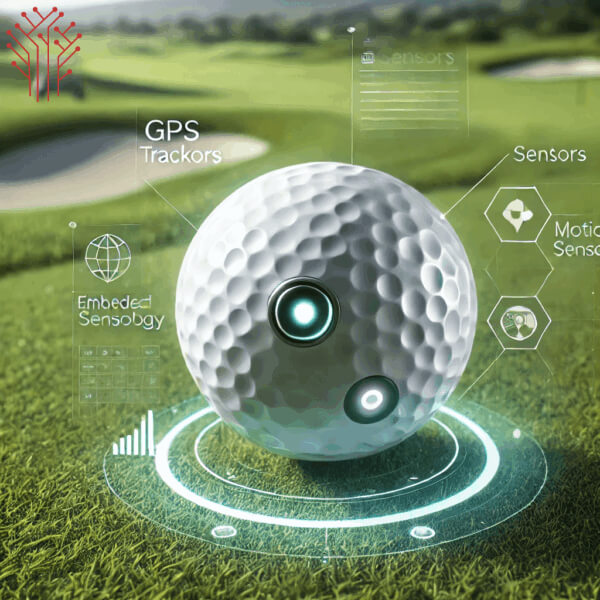
- ✕Fitting electronics inside a golf ball — extreme size and weight constraints
- ✕Original ESP32 design drained the coin cell in days — unacceptable for a sports product
- ✕BLE mesh reliability across a full golf course range
- ✕Real-time IMU data for rotation, speed, and angle — accurate enough to matter
- ✓Switched from ESP32 to nRF52840 — sub-µA sleep current, fast BLE wake, coin-cell optimised
- ✓Custom 4-layer PCB designed to fit inside the ball with custom antenna routing
- ✓BLE 5 Mesh across course-mounted spot beacons — reliable multi-hop range
- ✓Azure IoT Hub backend with React dashboard — real-time analytics per shot

Rotation Tracking
Precise spin and rotation data captured per shot using IMU
Launch Angle
Launch angle calculated from accelerometer and gyroscope fusion

Ball Speed
Velocity at impact and in-flight speed measured and logged

9–12 Month Battery
Coin cell operation — nRF52 sleep modes extended life dramatically

BLE Mesh Network
Multi-hop mesh across course-mounted spot beacons

Cloud Analytics
Azure IoT Hub → React dashboard for per-shot performance data
Key Takeaway
Switching from ESP32 to nRF52 extended battery life from days to 9–12 months on a single coin cell — without changing any feature. Platform choice was the entire product.
BudKoin Smart Vending Machine
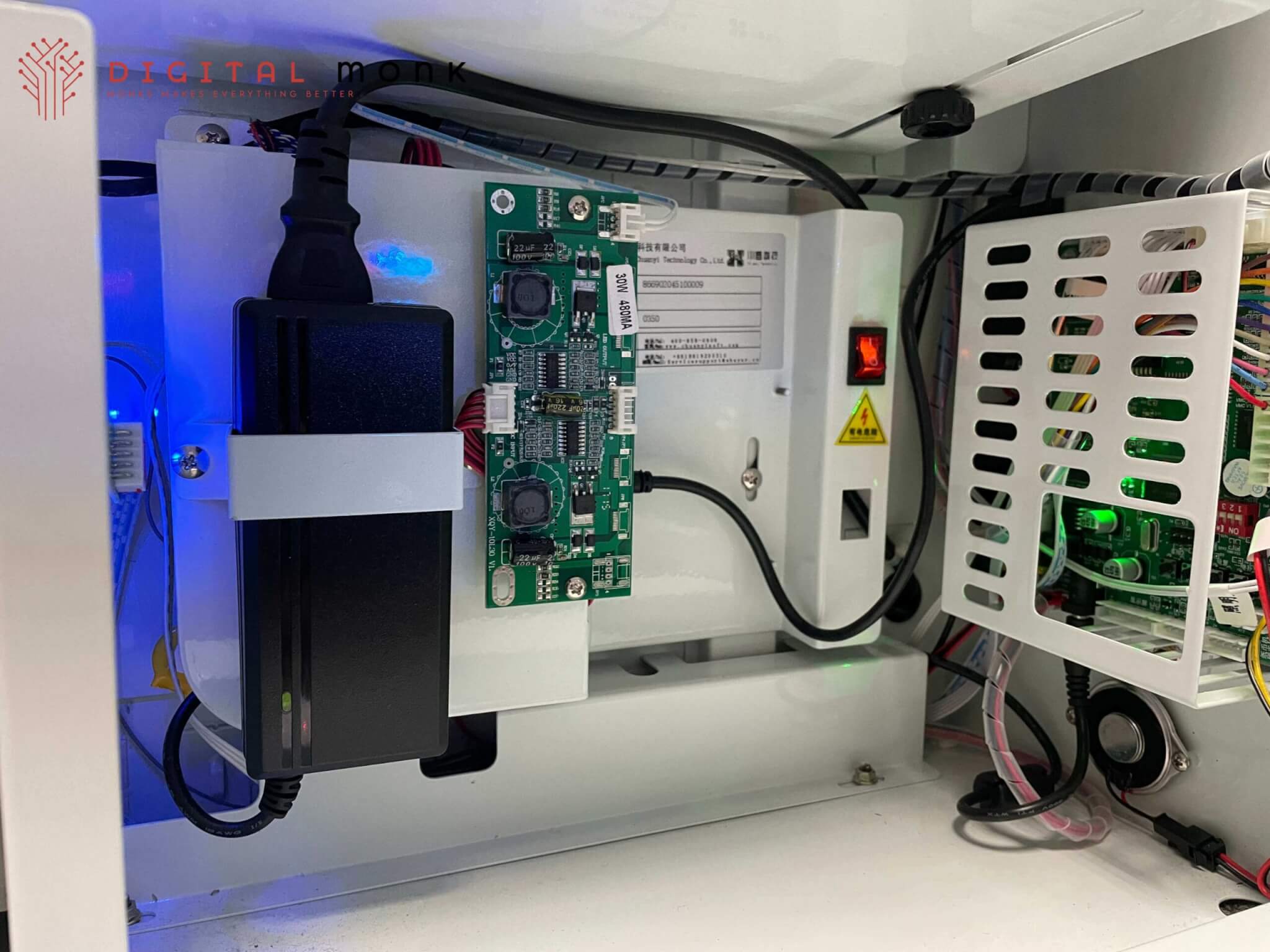
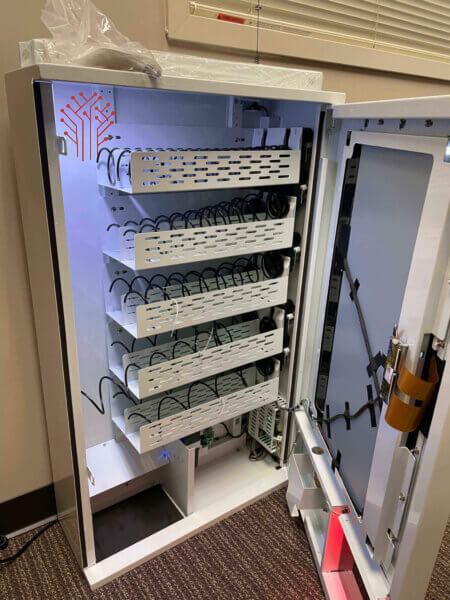
A blockchain-enabled smart vending machine deployed at Jersey Airport — integrating cryptocurrency payment, PyTorch-based UI, and MDB protocol hardware control.
QR Scan
Customer scans QR code on the machine to access the BudKoin payment portal
Select & Pay
Selects product and pays with BudKoin blockchain tokens via the web portal
Order ID
Transaction confirmed on-chain — a unique order ID is generated and sent to the machine
Authenticate
Raspberry Pi verifies the order ID via the backend API — validates payment authenticity
Dispense
RPi sends MDB dispense command to the vending hardware — product is delivered

Raspberry Pi 4
Central hub — runs Linux, PyTorch UI, MDB driver, and cloud API client simultaneously
PyTorch-Based UI
Touchscreen interface built with PyTorch for product selection and transaction display

MDB Protocol
Industry-standard multi-drop bus protocol for vending machine hardware control and dispense commands

Web Backend + Blockchain
BudKoin blockchain integration — verifiable payment ledger, no central payment gateway
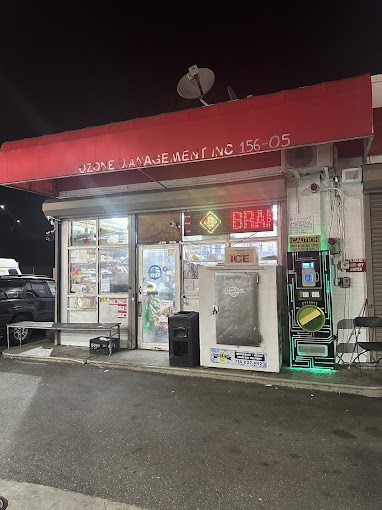
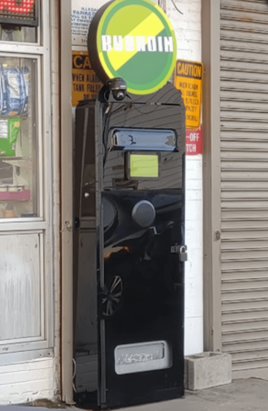
Key Takeaway
Only Raspberry Pi running Linux could simultaneously handle blockchain verification, PyTorch UI, MDB hardware protocol, and cloud API — no microcontroller could hold this architecture.
More Case Studies Coming
Additional DigitalMonk projects across all four platformsUltimate Comparison Table
All four platforms, all seven criteria — side by side. Use this as your quick-reference guide when making the final call.
| Criteria | ESP32Espressif | STM32ST Micro | nRFNordic | RPiRaspberry Pi |
|---|---|---|---|---|
⚡ Processing Power | ||||
📡 Built-in Connectivity | ||||
🔋 Power Efficiency | ||||
💵 Unit Cost | ||||
🖥️ OS Support | ||||
🔧 Ease of Development | ||||
🏭 Industrial Suitability |
The Bottom Line
ESP32
Highest total score for connected product development — the default starting point
STM32
Unbeatable on real-time control and industrial suitability — the production backbone
nRF
Wins on power efficiency by a wide margin — the only choice for coin-cell deployments
Raspberry Pi
Highest compute + best OS support — irreplaceable when Linux is part of the product
Key Decision Framework
Five questions. Five answers. If you can answer these, you know which platform — or combination — is right for your product.
Don't Guess Your Architecture.
Design It Right From Day One.
We've shipped hardware on all four platforms — from the Smart Golf Ball on a coin-cell nRF52 to the BudKoin vending machine at Jersey Airport running Raspberry Pi + blockchain. Talk to us before you spec your board.
Frequently Asked Questions
The questions engineers, founders, and product managers ask most when choosing between these platforms — answered directly, without the marketing fluff.
Only the Right Architecture.