Solar-Powered
RFID Water Vending
for Remote Communities
We built an off-grid, ESP32-powered water dispensing machine that gives desert communities free, metered access to clean water — with zero connectivity required, no cash, no apps.
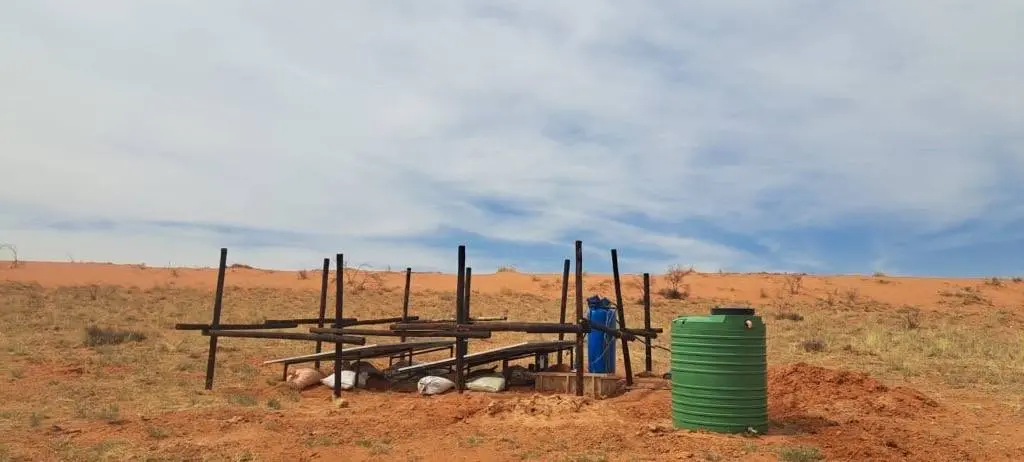
Water access in the Kalahari — no grid, no internet, no margin for error
The Mier communities sit in one of South Africa's most remote semi-arid regions. Water is a shared public resource — but access was uncontrolled, unmetered, and unsustainable. The brief was uncompromising.
- ☀️Fully solar-powered — no grid electricity anywhere near the installation site
- 📡Zero internet connectivity — GSM and WiFi both unavailable; all logic must run offline
- 🌡️Extreme desert conditions — temperatures swinging 50°C between summer days and winter nights
- 🧑🤝🧑Non-technical end users — UI must be effortless for people of all ages, including elderly community members
- 💧Precise metering — every litre counts; dispensing must be accurate and quota-enforced per card
- 🔒Tamper resistance — remote location demands rugged enclosures and anti-abuse design
End-to-end embedded engineering,
built for the edge of the world
ESP32 Core — The Brain of the System
We chose the ESP32 as the central controller for its balance of processing power, peripheral richness, and proven reliability in harsh field conditions. The entire dispensing logic — RFID authentication, quota tracking, valve actuation, and display communication — runs on a single ESP32 without cloud dependency.
Custom firmware handles the complete state machine: card read → quota check → valve open → litre measurement → valve close → quota deduct → card update. If power fails mid-dispense, the system recovers gracefully on next boot.
RFID Access & Quota Management
Each community member holds an RFID card preloaded with their daily/weekly water allocation. On tap, the ESP32 reads the card, verifies the remaining quota, opens the solenoid valve for the metered amount, and writes the updated balance back to the card — all in under two seconds.
No central database is required. The card itself is the record. Lost card = lost quota, which creates natural accountability within the community without requiring any administrative infrastructure. This is a fundamentally different model from conventional cashless vending machine systems — no payment gateway, no cloud dependency, no single point of failure.
DWIN HMI Display — Designed for Clarity
We integrated a DWIN intelligent display as the user interface. The UI shows remaining quota, transaction confirmation, error states, and solar/battery status — all without requiring literacy or technical knowledge. Visual cues and colour-coded states guide users through the process intuitively.
The display communicates with the ESP32 over UART. Custom DWIN pages were designed in the DGUS IDE, keeping UI updates fully independent of firmware changes.
Solar Power Architecture — Off-Grid by Design
The machine runs entirely on solar with a LiFePO₄ battery bank sized for 3 days of autonomy through cloudy periods. A dedicated solar charge controller manages charging cycles and provides low-voltage cutoff protection. The ESP32 monitors battery state of charge and throttles display brightness when reserves drop below threshold.
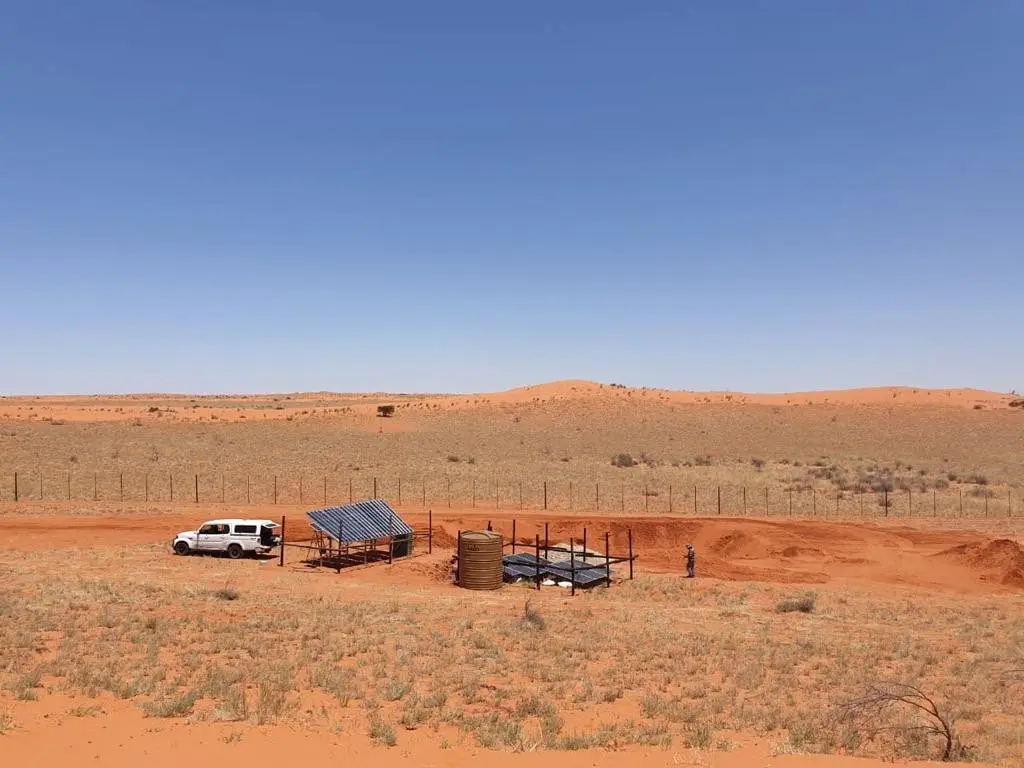
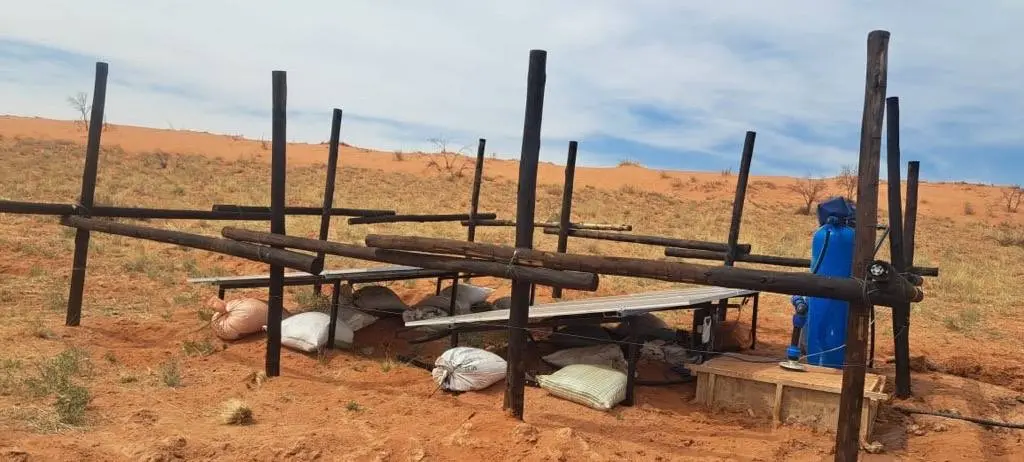
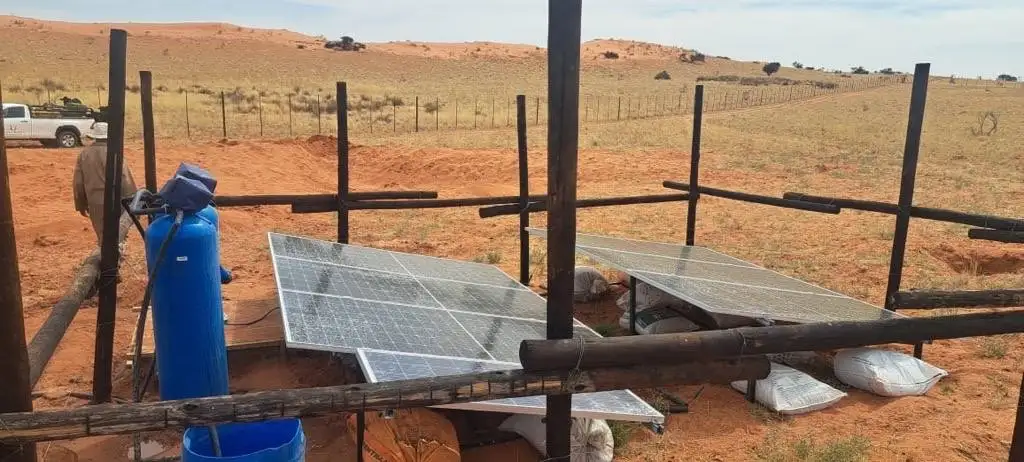
The wooden pole framework visible in the site photos is the locally fabricated solar panel mounting structure — built on-site using materials available in the region, reducing installation cost and shipping complexity.
Electronics Enclosure & Field Hardening
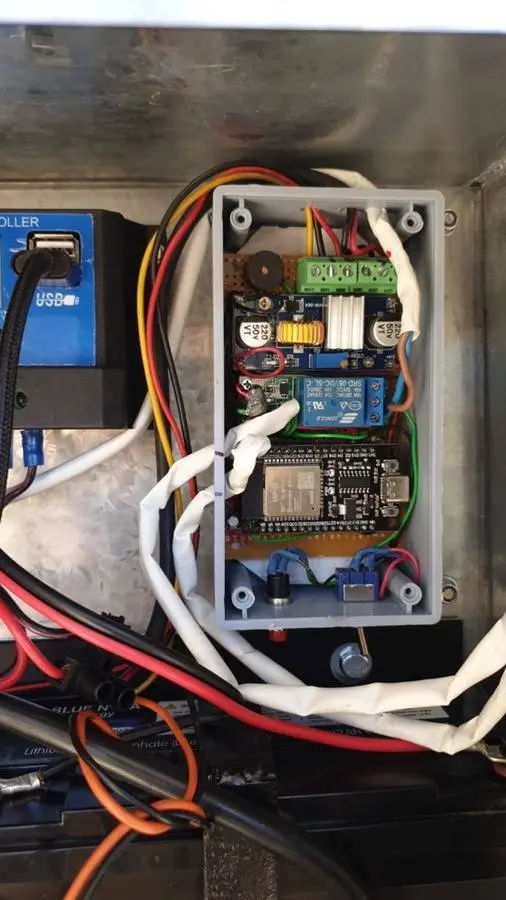
The control electronics — ESP32, relay board, buck converter, RFID reader, and terminal blocks — are packaged in an IP-rated enclosure mounted inside the machine cabinet. Every connection uses ferrule terminals and strain relief. Wiring is colour-coded and documented for future field service by non-specialist technicians.
The water path uses NSF-compliant tubing and a solenoid valve rated for continuous outdoor use. A pressure vessel (the blue cylinder visible in the photos) provides flow buffering from the borehole pump.
Lab Testing Before Deployment
Before shipping to site, the complete system underwent extensive bench testing at DigitalMonk's lab — validating dispensing accuracy, RFID read reliability, power-loss recovery, and display state transitions across the full usage flow.
Live in the Kalahari
From lab bench to desert deployment — the machine operating in Mier, Northern Cape.
Watch the system run
Two videos — one from our lab during development, one showing the DWIN machine UI that community members interact with every day.
The full tech stack
Every component selected for reliability in harsh, off-grid conditions — not lab conditions.
Shipped. Operational. Proven.
The machine has been live and dispensing water to Mier community members since deployment.
Technology that reaches where it's needed most
The hardest engineering problems aren't always the most complex.
Building for Mier wasn't about cutting-edge connectivity or cloud dashboards. It was about building something robust enough to run for years without intervention, simple enough for any community member to use, and sustainable enough to run on sunlight alone.
The lesson from this project: offline-first embedded systems aren't a limitation — they're a design philosophy. When you strip away infrastructure dependency, what remains is a machine that genuinely works — even 500km from the nearest city. If you're exploring custom vending machine development for your own use case — connected or off-grid — this is the kind of thinking we bring to every build.
— DigitalMonk Engineering Team
Have a hardware problem
that matters?
Whether you're building for remote communities, industrial environments, or a custom vending machine for any vertical — our embedded team has shipped in every condition. Let's talk.
🔒 NDA signed before any technical discussion. Your idea is safe.