How IoT Sensors Improve Custom Vending Machine Performance
The vending industry is evolving rapidly with the integration of IoT technology. Unlike traditional machines that relied on manual checks and fixed restocking schedules, modern vending machines use IoT sensors for real-time monitoring and smarter operations.
For businesses developing custom vending machines these sensors help track inventory, monitor machine health, and analyze customer interactions. This data allows operators to improve performance, reduce downtime, and enhance the overall vending experience.
The Rise of Smart Vending Machines
Over the past decade, vending machines have evolved from simple snack dispensers to fully connected smart retail kiosks. IoT-enabled machines integrate sensors, connectivity modules, cloud platforms, and analytics tools to monitor and control machine operations remotely. IoT sensors can monitor factors such as temperature, humidity, stock levels, machine health, and energy consumption. The collected data is transmitted to cloud platforms where operators can analyze performance and take action instantly.
This level of intelligence allows vending businesses to move from reactive maintenance to proactive operations, improving uptime and efficiency across entire vending networks.
What Are IoT Sensors in Vending Machines?
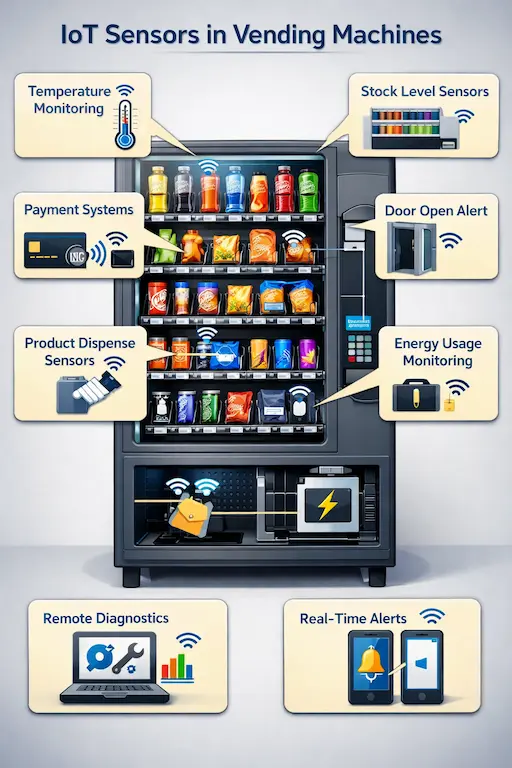
IoT sensors are small electronic devices that collect data from physical environments and send it to digital systems for analysis. In vending machines, common sensors include:
- Temperature sensors - monitor cooling systems
- Weight sensors- detect product inventory levels
- Optical sensors- confirm product dispensing
- Door sensors - detect unauthorized access
- Energy sensors - measure electricity consumption
- Motion sensors - detect customer interaction
These sensors act as the “eyes and ears” of a smart vending machine, constantly monitoring operational conditions and sending updates to cloud dashboards.
Upgrade Your Vending Machines With IoT Technology
Real-Time Inventory Monitoring
One of the biggest advantages of IoT sensors is real-time inventory tracking. Traditional vending machines required operators to manually check stock levels, which often resulted in empty shelves or unnecessary restocking trips.
IoT-enabled machines solve this problem through sensors that detect product availability inside the machine.
How it works
Weight sensors or optical sensors track product levels in each slot. When inventory drops below a certain threshold, the system automatically sends alerts to operators.
- Prevents out-of-stock situations
- Reduces unnecessary restocking visits
- Improves supply chain planning
- Ensures popular products are always available
Real-time inventory tracking significantly increases operational efficiency and improves customer satisfaction because customers rarely encounter empty machines.
Predictive Maintenance and Fault Detection
Machine downtime can significantly impact vending revenue. When a vending machine stops working due to mechanical issues, cooling failures, or electrical faults, it immediately affects sales.
IoT sensors enable predictive maintenance, which allows operators to detect problems before they lead to machine failure.
Sensors continuously monitor:
- Compressor performance
- Temperature stability
- Motor vibration
- Power consumption
- Mechanical component behavior
If the system detects abnormal patterns, it automatically alerts technicians so they can schedule maintenance before the machine stops working.
Benefits of predictive maintenance
- Reduced machine downtime
- Lower maintenance costs
- Longer equipment lifespan
- Improved reliability
Instead of reacting to failures, operators can prevent them entirely.
Temperature and Environmental Monitoring
Temperature control is essential for vending machines that sell beverages, dairy products, fresh food, or pharmaceuticals.
IoT temperature sensors continuously monitor internal cabinet conditions. If temperatures rise above acceptable limits, the system sends alerts to operators.
This ensures:
- Food safety compliance
- Product quality protection
- Reduced spoilage losses
- Better energy management
Humidity sensors can also monitor internal moisture levels, preventing condensation or damage to sensitive electronics.
Environmental monitoring is especially important for machines placed in outdoor locations, transportation hubs, or hot climates.
Build Smarter Automated Retail Machines
Energy Optimization and Sustainability
Energy consumption is one of the largest operational costs for vending machine operators. Smart IoT sensors help businesses reduce electricity usage while maintaining machine performance.
Energy Monitoring Sensors Track:
- Compressor usage
- Lighting activity
- Idle power consumption
- Peak energy demand
Smart Occupancy Logic
Occupancy sensors can automatically turn off display lights or reduce cooling activity when no customers are nearby, significantly lowering electricity consumption.
Energy Optimization Benefits
Remote Monitoring and Machine Management
IoT connectivity allows vending machines to send real-time data to cloud-based dashboards. Operators can monitor all machines in their network remotely without visiting each location. The intelligence behind these dashboards depends heavily on robust custom vending machine software that ties sensor data, inventory alerts, and remote controls into a unified operator experience.
Real-Time Visibility Into:
- Inventory levels & Sales data
- Machine health & Error alerts
- Temperature & Payment transactions
Remote Operator Capabilities:
- Restart machines remotely
- Update software & Adjust pricing
- Change digital product displays
This level of remote control is essential for scaling large vending businesses.
Smart Logistics and Optimization
Without data insights, operators often follow fixed restocking schedules. IoT sensor data enables data-driven logistics planning to match actual demand.
Dynamic Workflow Example:
This reduces fuel costs, travel time, and operational expenses, dramatically improving efficiency for networks of any size.
Improved Customer Experience
IoT sensors not only improve machine performance but also enhance the end-user journey, making vending feel more like modern retail.
Theft Detection and Security Monitoring
Vending machines can sometimes be targets for theft or vandalism, especially in public locations. IoT sensors improve machine security by detecting suspicious activity.
Immediate Action: If unauthorized access is detected, alerts are sent instantly to operators or security teams to prevent losses and protect equipment.
Data Analytics for Business Growth
One of the most powerful advantages of IoT-enabled vending machines is the ability to collect valuable business data.
Sensors generate insights about:
- Product demand patterns
- Peak purchasing times
- Machine performance trends
- Customer preferences
- Location profitability
Operators can use these insights to make smarter decisions regarding product selection, pricing strategies, and machine placement.
Data-driven vending strategies can significantly increase overall revenue and machine efficiency.
Integration With Smart Payment Systems
Modern vending machines are increasingly integrated with IoT-enabled payment technologies.
Sensors and payment modules support:
- Contactless card payments
- Mobile wallet transactions
- QR code payments
- Digital loyalty programs
Cashless payment systems improve convenience for customers while enabling operators to track revenue in real time.
These technologies are especially important in urban environments where digital payments dominate retail transactions.
The Future of IoT in Vending Machines
The role of IoT in vending technology is expected to expand even further in the coming years.
AI Product Recommendations
Machines intelligently suggest products based on user behavior and purchasing patterns.
Computer Vision Machines
Vision systems automatically detect product selection and manage smart checkout.
Dynamic Pricing
Pricing automatically adjusts based on demand, inventory levels, and customer trends.
Voice Enabled Interfaces
Customers can interact with vending machines using voice commands for easier access.
Smart City Integration
Vending machines become part of connected smart city infrastructure and services.
As IoT technology continues to evolve, vending machines will become increasingly intelligent retail platforms capable of delivering personalized experiences and automated operations.
Companies investing in custom vending machines today are positioning themselves at the forefront of automated retail innovation.
Final Thoughts
IoT sensors are transforming vending machines from simple automated dispensers into intelligent retail systems. By enabling real-time monitoring, predictive maintenance, inventory automation, and data-driven insights, IoT technology dramatically improves vending machine performance.
Businesses adopting custom vending solutions with IoT capabilities can reduce operational costs, improve uptime, and deliver better customer experiences.
As automated retail continues to grow globally, IoT-powered vending machines will play a central role in shaping the future of smart retail infrastructure.