Top 10 Raspberry Pi Applications in Real-World Products
Not just a hobby board. Raspberry Pi is powering production systems across IoT, automation, healthcare, and beyond — and this guide shows you exactly how.
🚀 Build Your Raspberry Pi Product
Most People Underestimate What Raspberry Pi Can Do
Most people encounter Raspberry Pi as a learning tool or weekend project. That initial impression tends to stick — and it couldn't be more misleading.
Here's the common assumption: Raspberry Pi is for hobbyists. Here's the reality:
It's just a hobby board for school projects
Only good for small DIY learning experiments
Too underpowered for real commercial products
Not suitable for any serious industry deployment
The Real Picture
In this article, we break down real-world Raspberry Pi applications — not theoretical ideas, but systems already being used in production across industries worldwide.
1. Smart Vending Machines & Retail Automation
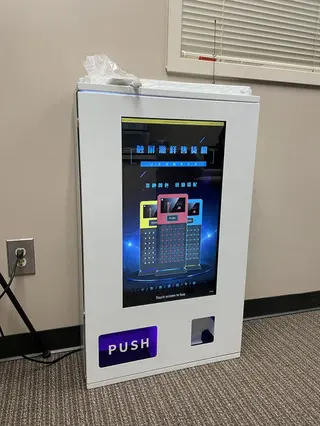
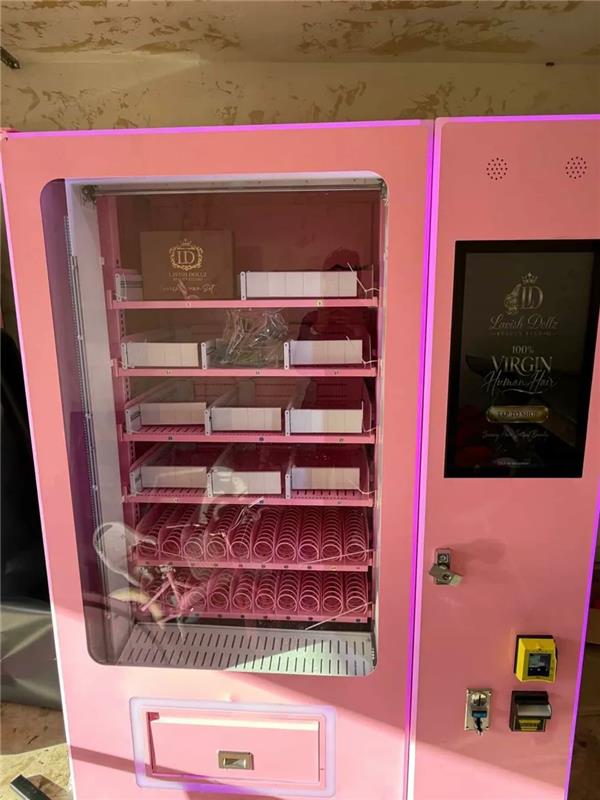
Raspberry Pi is widely used in modern vending systems — especially in cashless and connected environments where traditional controllers fall short.
Why Raspberry Pi Works Here
Easy integration with peripherals, a strong open-source community with battle-tested libraries, and native support for real-time communication protocols make it the go-to platform for vending innovation.
If you're debating whether to build this in-house or bring in experts, this breakdown will help you avoid costly mistakes.
Read the Breakdown →2. Industrial IoT Monitoring Systems
Factories and industrial setups are increasingly turning to Raspberry Pi for mission-critical monitoring — not because it's cheap, but because it delivers real results at scale when implemented correctly.
Sustained high temps degrade the SoC and storage, causing unexpected shutdowns and data corruption.
Fine particulate buildup clogs cooling, short-circuits boards, and dramatically shortens device lifespan.
Voltage spikes and brownouts corrupt SD cards and can permanently damage the board without protection.
Poor implementation = system failure. Getting Raspberry Pi to work reliably in industrial settings requires hardened enclosures, proper power conditioning, and experienced engineering — not just a Pi in a box.
3. Smart Home & Building Automation
From residential smart homes to large commercial buildings, Raspberry Pi has become the go-to brain for automation systems — replacing expensive proprietary controllers at a fraction of the cost.
Lighting Automation
Schedule, dim, and trigger lights based on occupancy, time of day, or sensor input — all locally processed.
Security Systems
Camera feeds, motion detection, door sensors, and real-time alerts — integrated without costly subscriptions.
HVAC Control
Intelligent climate management based on occupancy and ambient conditions for energy savings.
Energy Monitoring
Track consumption per circuit, identify waste, and generate reports — all from a single Pi device.
Privacy Advantage
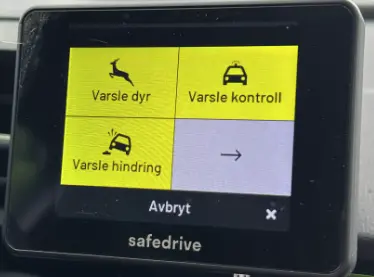
Unlike cloud-dependent smart home systems, Raspberry Pi processes data locally — your data never leaves the building unless you choose to send it.
4. Healthcare & Medical Devices
Healthcare startups are discovering that Raspberry Pi can dramatically cut prototyping time and hardware costs — enabling faster market entry for life-changing devices.
- No regulatory pathway (FDA / CE / MDR)
- Untested sensor accuracy & calibration
- Data privacy gaps — HIPAA / GDPR exposure
- No fault tolerance or failsafe logic
- SD card failure under continuous operation
- Compliance-aware architecture from day one
- Validated sensor integration & accuracy testing
- Encrypted data pipelines & audit logging
- Redundancy & watchdog timers for uptime
- SSD or eMMC storage for long-term reliability
5. Edge AI & Computer Vision
With the Raspberry Pi AI Kit and Camera Module 3, the platform has evolved into a genuine edge AI device — running inference locally without any cloud dependency. This is one of the fastest-growing use cases in 2026, and where teams outgrowing the Pi's ceiling often turn to custom embedded AI solutions. If you want to try it yourself, here is how to run AI models on a Raspberry Pi, step by step.
Detect intrusions, loitering, or anomalies in real time — without streaming footage to the cloud.
Identify products, vehicles, or equipment on a conveyor or in a workspace using YOLO or TFLite models.
Access control and attendance systems that run entirely on-device — no internet required.
Count footfall, track dwell time, and map customer movement patterns to optimize store layout.
Pi Camera Module captures live video feed at the store entrance
Raspberry Pi runs footfall detection model locally — no cloud upload
Real-time analytics delivered to store managers via local web UI
Local Processing
AI inference happens entirely on the device. No cloud subscription, no latency, no data leaving the premises.
Faster Response Time
Decisions are made in milliseconds. Cloud-dependent systems introduce lag that makes real-time detection impractical.
Privacy Control
Businesses retain full control over sensitive footage and biometric data — critical for GDPR and enterprise compliance.
Technical Note
Running YOLOv8 or TensorFlow Lite on a Raspberry Pi 5 with the AI HAT+ delivers up to 26 TOPS — enough for real-time object detection at 30fps. The gap between Pi and dedicated edge hardware is closing fast.
6. Logistics & Tracking Systems
From warehouse floors to delivery vehicles on the road, Raspberry Pi is quietly powering the real-time visibility layer that modern logistics operations depend on.
Fleet Tracking
Live GPS location of every vehicle in a fleet — speed, route deviation, idle time — all streamed to a central operations dashboard.
Warehouse Asset Tracking
Track pallets, bins, and equipment across a facility using RFID or BLE beacons integrated with Raspberry Pi gateways.
Cold-Chain Monitoring
Continuous temperature and humidity logging for pharmaceuticals, food, and perishables — with instant alerts on threshold breach.
Tracks real-time position, route, and ETA — updated every few seconds via cellular uplink
Monitors cargo conditions continuously — logs every reading and alerts on any deviation from spec
All data streams to a central operations dashboard — accessible by dispatch, clients, and compliance teams
7. Education & Rapid Prototyping
This is where Raspberry Pi started — and it still dominates. From university labs to startup garages, the Pi remains the fastest way to go from idea to working prototype.
Define requirements, pick sensors and peripherals, sketch the architecture
Wire up the Pi, write the code, test the core logic — days, not months
Show stakeholders or investors a working system — not slides, real hardware
This is where most teams get stuck
A Pi running your idea in a controlled environment is miles away from a deployable, scalable, maintainable product. The gap is where most teams get stuck — and where the real engineering work begins.
- Works in the lab
- One-off build
- No error handling
- Manual updates
- Runs 24/7 reliably
- Scales to 100s of units
- Handles failures gracefully
- Remote updates & monitoring
When Raspberry Pi Stops (And Reality Begins)
Raspberry Pi is an exceptional platform — but every platform has a ceiling. Understanding exactly where that ceiling is will save your product team from expensive mistakes down the road.
Scalability Issues
- Managing hundreds of devices becomes operationally complex
- OS-level failures increase significantly at scale
- No native fleet management or OTA update system
Hardware Constraints
- Power inefficiency — draws more than custom silicon
- Physical size not suitable for compact form factors
- Not rated for rugged or extreme environments
Production Cost
- At scale, unit cost exceeds custom-designed hardware
- BOM includes unnecessary components for your use case
- Licensing and certification costs add up per unit
Reliability Concerns
- SD card corruption under continuous write loads
- Boot failures after power loss or voltage drops
- Long-term stability issues in unattended deployments
Serious product teams use Raspberry Pi as a stepping stone — not the destination.
- Rapid prototyping
- Early-stage deployment
- Concept validation
- Custom PCB design
- Optimised embedded systems
- Production-ready architecture
Schematic capture, PCB layout, component selection, DFM review — a completely different discipline from software.
Moving from Linux-based Pi code to bare-metal or RTOS firmware on custom silicon — not a simple port.
Supply chain, MOQs, testing fixtures, quality control, and certification — none of which exist in prototype world.
Building In-House or Bringing In Experts?
If you're debating whether to build this in-house or bring in experts, this breakdown will help you avoid costly mistakes.
Read the Breakdown →Conclusion — From Idea to Real Product
Raspberry Pi is not just a learning tool. It is a powerful, battle-tested foundation for building real systems across some of the most demanding industries in the world.
Build a prototype. Get something working on a bench. Show a demo. This part is achievable with time and patience.
Take it to production. Scale it. Make it reliable. Certify it. Maintain it. This is where the real work — and the real value — lives.
Experiment independently, learn through trial and error, and navigate hardware, firmware, manufacturing, and compliance on your own.
Partner with developers who have already built and scaled Raspberry Pi systems — and who know when to move beyond Pi to custom hardware.
Planning a real product — not just a demo?
Work with developers who understand both Raspberry Pi systems and the transition to production hardware. We've shipped real products across vending, IoT, healthcare, and automation.
Explore Our Raspberry Pi Services →