Building an Interactive Music Floor
for a Live Event
An event agency needed an activation booth people would actually stop and play with — not another photo backdrop. We built a floor you could make music with: three pressure-sensing mats, each running its own ESP32 microcontroller, coordinated by a Raspberry Pi acting as the central beat-tracking brain — part of our broader IoT and embedded systems development work.
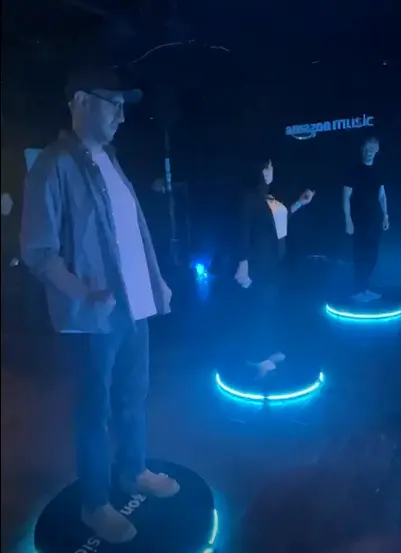
See the Interactive Music Floor at Work
Guests moving freely between mats, layering parts of the same song and pulling beat-synced lighting along with them — captured live on the floor.
A Concept and a Deadline, No Reference Hardware
An event agency came to us with a problem, not a spec: they had an activation booth at a live event and wanted something people would actually stop and play with. The idea was a floor you could make music with — no prior product to copy, no reference hardware, just a concept and a deadline.
Three Wooden Mats, One Central Brain
Three custom-built wooden mats, each housing a load cell and HX711 amplifier, wired to individual ESP32 microcontrollers. A Raspberry Pi runs as the central brain: it holds the show's music, tracks the beat in real time, and coordinates all three mats over a wireless link.
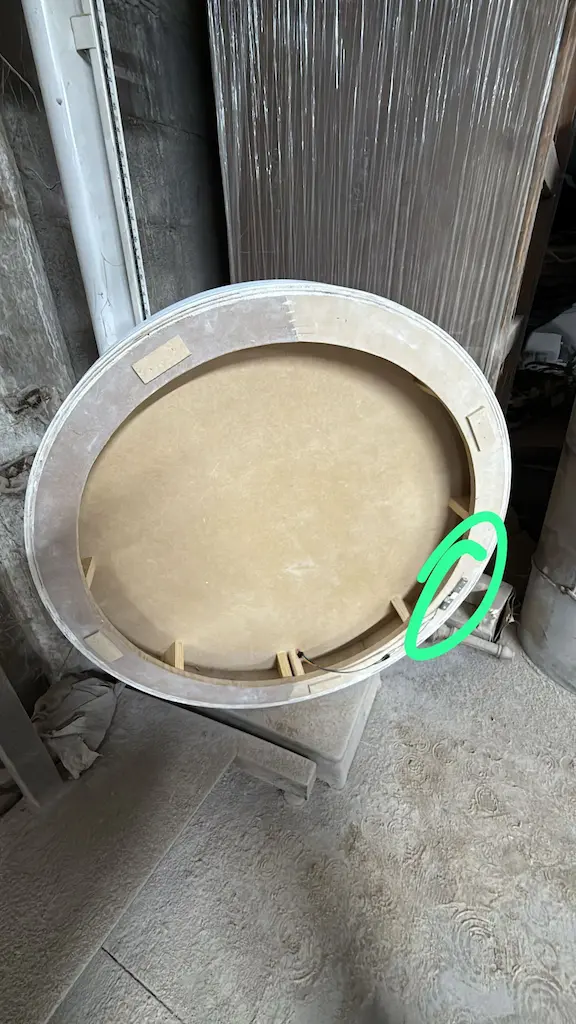
Every track is split into separate parts — beat, drums, lyrics, vocals, piano — and each mat is assigned one part. The HX711 on each mat isn't measuring weight as a scale would; it's watching for pressure to cross a threshold calibrated to the mat's own baseline. Step on hard enough, and that mat's part starts playing. Three people on three mats means three layers of the same song, live, built by whoever's standing where.
Two Signal Paths That Never Talk to Each Other
Independently of the pressure logic, the Pi's beat-detection engine drives an LED ring built into the edge of each mat, pulsing in time with the music. It's atmosphere, not a game signal — there's no scoring, no win state. The lights react to the song, the sound reacts to the feet. Running them separately kept the hardware simple: no need for tight synchronization between beat-detection timing and touch latency, which is exactly the kind of coupling that gets fragile fast in a noisy, crowded event environment.
Engineered for a Night of Foot Traffic
This wasn't a lab demo — it had to survive a night of people stomping on it in a dark, crowded venue.
A Working, Playable Installation
At the event, the mats sat as a working, playable installation — not a static display, in the same vein as the branded arcade and interactive game installations we build for events and venues.
Sound Layering
Guests moved between mats freely, mixing beat, drums, vocals, and piano in whatever combination they wanted.
Beat-Synced Lighting
The LED ring on each mat kept the whole installation visually tied to the music.
No Instructions Needed
Nobody needed an explanation of how it worked — step down, and the floor responds.
How It's Built
Two signal paths, kept deliberately separate, running on hardware built to take a night of foot traffic.
What We Can Actually Point To
The event wasn't ticketed, so we don't have a footfall count or engagement metric to report — and we're not going to invent one. What we can point to is the build itself.
Building an Interactive Installation or Live Activation?
We can help you design, prototype, and deploy it — from embedded firmware to hardware that survives a crowd.
Built by DigitalMonk for an event agency activation at a live Amazon Music event.