ESP32 Cassette Deck Controller: Custom PCB & Firmware
How we retrofitted a mechanical cassette deck with a custom, in-house-designed and fabricated ESP32 PCB — driving the original motor and solenoids by relay, adding WiFi control and scheduled playback, without touching the analog tape path that makes it sound like a cassette.


Product Overview
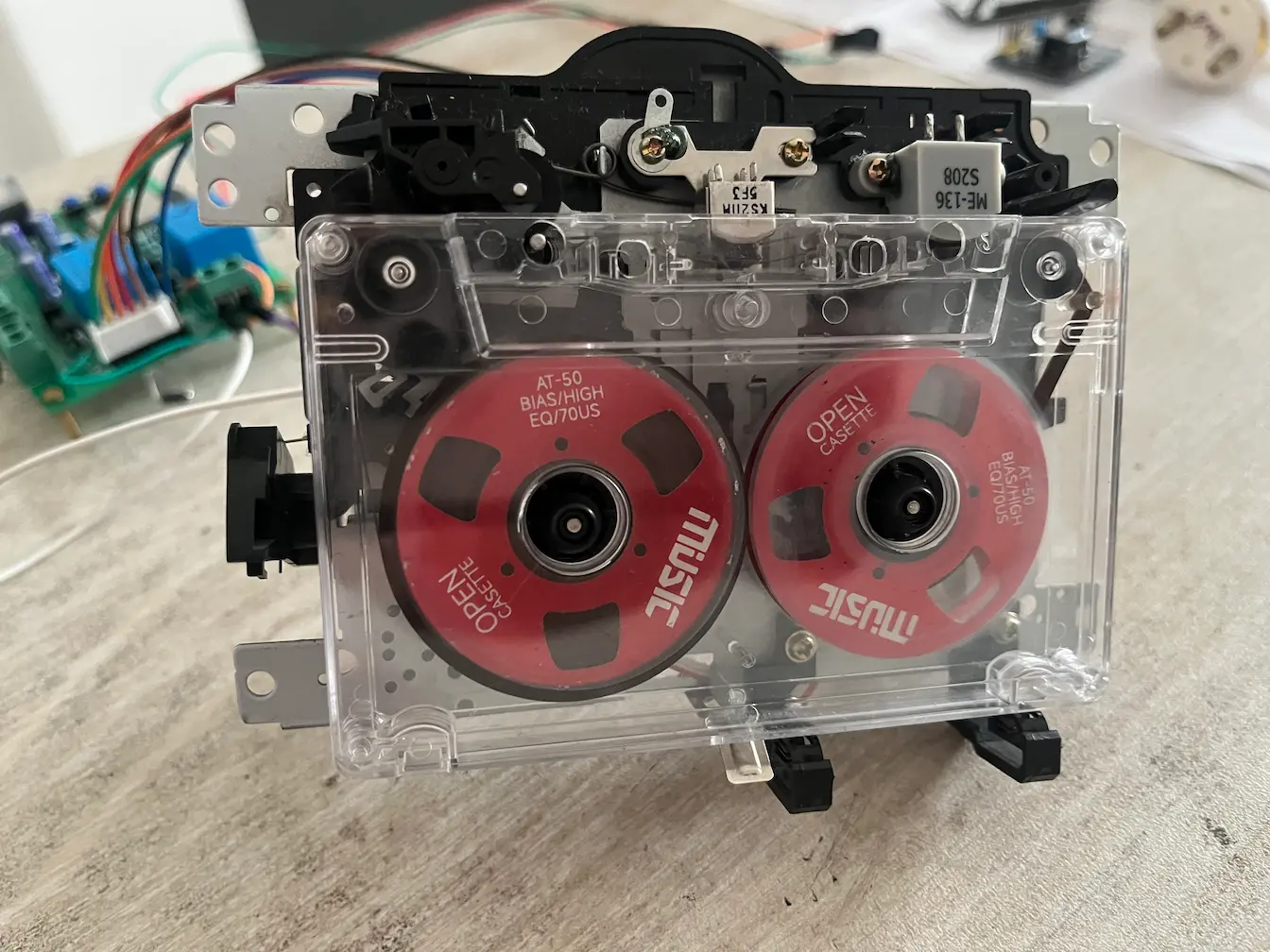
DigitalMonk designed and built a custom ESP32-based controller for a mechanical cassette deck — turning a single-purpose analog audio mechanism into a controllable, connected device. The part that matters to how it sounds is untouched: tape still plays back through the deck's own magnetic head, the same way a cassette always has. What changed is everything around that — play, pause, stop, eject, fast-forward, and rewind are now driven by a custom PCB we designed and fabricated in-house, with WiFi added for remote control and scheduled playback.
A client with an existing analog cassette mechanism wanted it to work like a modern connected device — precise transport control, remote operation, and scheduling — without losing the original tape playback. We built the electronics and firmware layer that made that possible, on top of hardware the client already had.
The Client's Challenge
The client had an existing analog cassette mechanism and wanted more out of it than four mechanical buttons and no way to reach it remotely. Manually cueing a tape by holding down fast-forward and guessing when to let go is exactly the kind of friction that makes an old format frustrating to actually use day to day.
The brief settled on a specific set of requirements:
- ◆Precise forward and rewind control — no more overshooting the spot on the tape
- ◆A web app to operate the deck remotely, not just from the physical buttons
- ◆Timer/alarm scheduling — playback can start on its own at a set time
- ◆No change to how the tape actually sounds — real analog playback, not digitized audio
Taken together, those requirements turn a decades-old mechanical format into an IoT device — without touching the one thing that makes it a cassette deck in the first place: the way it actually plays a tape.
Engineering
Hardware & PCB Design
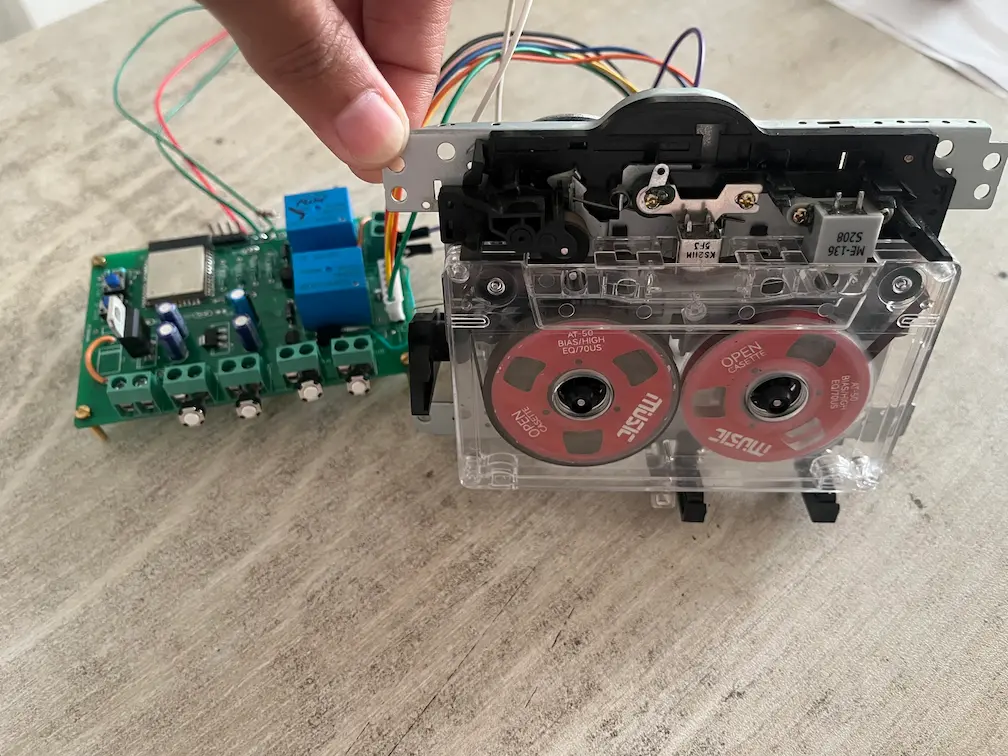
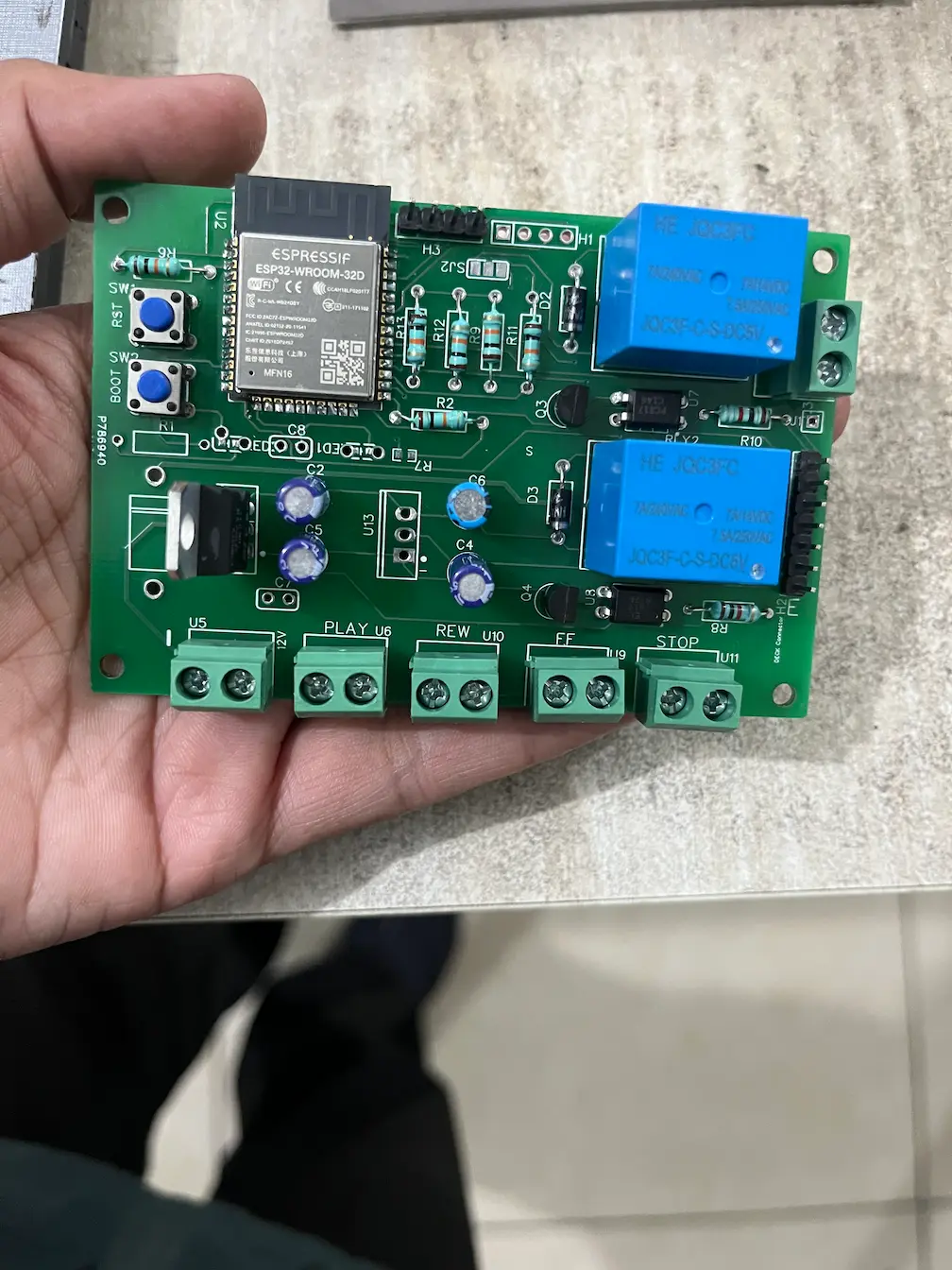
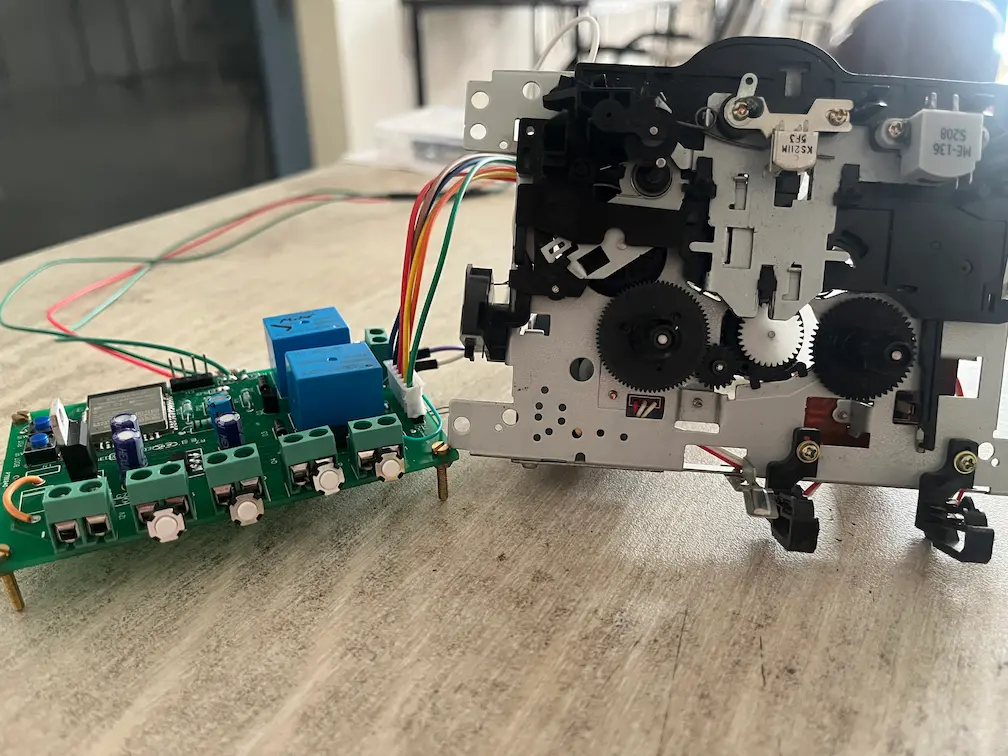
We designed a custom ESP32 PCB in-house and fabricated it ourselves, built specifically to interface with the deck's existing motor and solenoids rather than replace them. Matching the board's connector pinout and component placement to the deck's original wiring was the hardest part of the layout — there was no standard reference design to work from, so the footprint had to be built around the deck's actual harness rather than the other way round.
Relay-Driven Transport Control
Two relay modules on the board switch power to the deck's motor and solenoids in response to pulses generated by the ESP32, giving four physical controls on the board itself: play/pause, stop/eject, forward, and backward. The same command path runs whether the input comes from a button on the board or a request from the web app — the ESP32 doesn't distinguish between the two once a command is decided:
- 1Command received
A physical button press or a request from the web app selects one of the four transport actions.
- 2ESP32 generates the drive pulses
Firmware translates the command into the pulse pattern needed to switch the correct relay for the correct duration.
- 3Relays switch power to the motor or solenoids
The relay modules apply power to the deck's original motor and solenoid circuits — the same circuits the deck used before the retrofit.
- 4The mechanism does the rest
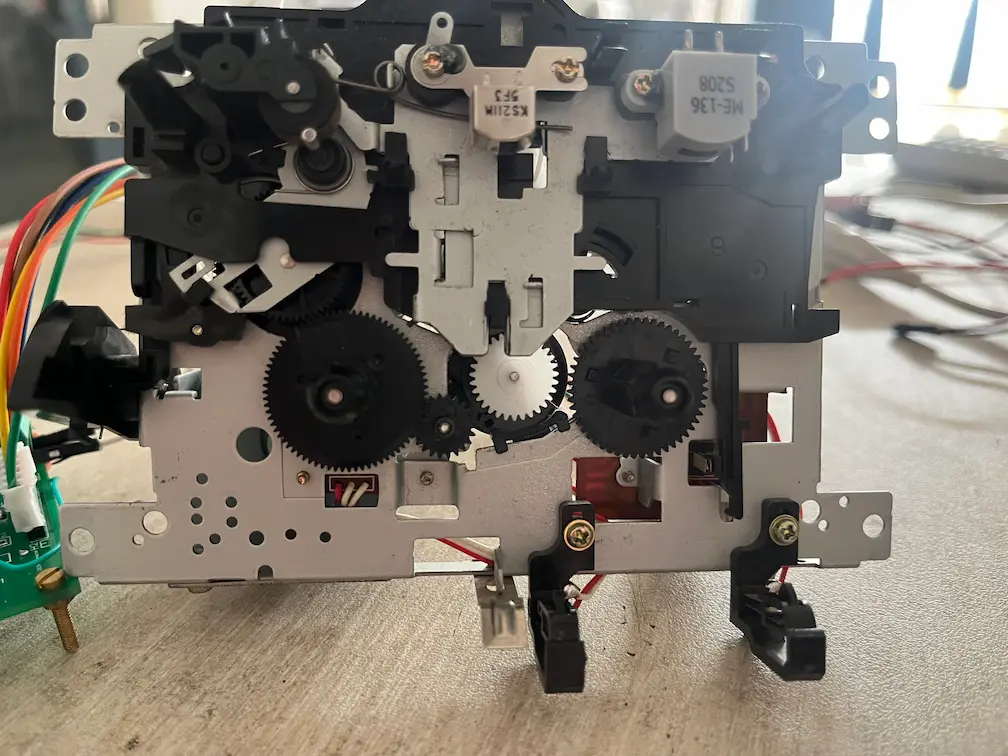
Gears, capstan, and pinch roller move the tape exactly as they would in an unmodified deck — the ESP32 never touches the tape path itself.
Precise Forward & Fast-Forward Movement
A relay is an on/off switch, not a speed controller, which made precise forward and rewind movement the trickiest problem in the build — early runs could overshoot or undershoot where the tape stopped. Getting that under control came down to tuning the timing of the pulses driving the motor in firmware, so forward and rewind now stop close to where the user expects, rather than several seconds later.
Reusing the Deck's Own Auto-Stop
Rather than adding a new sensor, the firmware reads the deck's existing, built-in end-of-tape mechanism to know when a reel has run out and stops the motor automatically. Reusing the deck's own mechanical safety feature kept the retrofit simpler and avoided duplicating something the hardware already did reliably.
Challenges & Solutions
Matching the Deck's Connector Pinout
Problem: There was no reference design for this deck's connectors — the PCB had to match an existing harness with a fixed pinout and physical placement, not the other way round.
Solution: We built the board's footprint directly around the deck's actual connector positions and pin order, so the custom PCB drops onto the existing harness with no rewiring or adapters.
Precise Forward & Fast-Forward Movement
Problem: A relay is an on/off switch, not a speed controller — early runs overshot or undershot where the tape stopped during forward and rewind.
Solution: Tuning the timing of the pulses driving the motor in firmware brought the movement under control, so forward and rewind now stop close to where the user expects.
Web App Control & Scheduled Playback
The ESP32 connects to WiFi so the deck can be operated from a web app rather than only from the four buttons on the board — the same play/pause, stop/eject, forward, and backward commands, sent remotely instead of pressed by hand. That link is also what makes scheduling possible: the client can set a timer or alarm for the deck to start playback on its own, at a set time, without anyone standing in front of it.
None of this required touching the analog side of the deck. The web app talks to the ESP32, the ESP32 issues the same relay-driven commands it would from a physical button press, and the tape plays back exactly as it always has.
Production Reality
The PCB was designed and fabricated in-house — the same capability DigitalMonk applies across its hardware work. For this build specifically, that meant matching an unusual, deck-specific connector pinout and component placement that no off-the-shelf development board could have handled cleanly; a generic ESP32 module wired up with jumper leads was never going to fit inside the deck's original housing or line up with its existing harness.
Client Outcome
The retrofit is complete and working: play, pause, stop/eject, forward, and backward all run through the custom board, tape still plays back through the deck's original analog path, and auto-stop reliably halts the motor at the end of a reel. On top of a mechanism that used to only work with someone standing in front of it, the client now has WiFi-based remote control and scheduled playback.
Gallery
What This Proves
IoT doesn't require replacing what already works. The tape mechanism, the motor, and the solenoids were all original — our job was building the electronics and firmware layer that could drive them precisely and connect them to a network, without touching what made the format worth keeping in the first place.
Why DigitalMonk
This project needed a board designed around someone else's existing mechanical hardware, not a clean-sheet product — matching an unfamiliar connector layout, driving legacy motor and solenoid circuits by relay, and tuning motor timing until the movement was precise. That's the kind of retrofit work our ESP32 developers take on regularly, backed by in-house PCB design and fabrication rather than outsourced boards.
Custom PCB Design
Boards built to match your existing hardware's connectors and footprint — not generic dev-board layouts
Legacy Hardware Retrofit
Driving original motors, solenoids, and sensors instead of replacing mechanisms that already work
Embedded Firmware
Pulse-timing, calibration, and control logic tuned until the physical motion is precise and repeatable
WiFi & Scheduling
Web app control and timer/alarm scheduling layered on top, without touching the analog signal path
Have a Legacy Hardware Retrofit in Mind?
Old mechanism, new control layer — we design the board, write the firmware, and make it work with what you already have. Tell us what you're building.