Agritech Development Company,
Built for the Field
Farms don't have mains power, reliable Wi-Fi or a clean bench. We build agriculture IoT systems around those conditions: sensor nodes, firmware, enclosures and dashboards designed together, then tested outdoors.
Sensor to dashboard, built by one team.
Agriculture IoT Fails in the Field, Not on the Bench
Dust, moisture, heat and long distances to the nearest router break designs that worked fine on a desk. We design for those failure modes from the first hardware decision, rather than discovering them after the device is installed.
Below: the constraints that shape every agritech build, how a typical system fits together, and the work we have shipped.
Why Agriculture IoT Is Hard
Three things have to be right together. Get one wrong and the system fails in the field, however good the other two are.
Field Durability
Enclosures and connectors have to survive sun, water and dust for a full season, not just a demo. We design for the environment the device will actually sit in.
Off-Grid Power & Connectivity
Field nodes run on batteries or solar with patchy coverage. Firmware has to keep working offline and sync when a connection returns.
Sensor Drift
Soil and environmental sensors drift over a season. Calibration and sanity-checking of readings are part of the design, not an afterthought.
From Sensor to Dashboard
Most agritech systems share the same four layers. We build all of them. For a deeper look at the architecture, see our guide to IoT in agriculture: smart irrigation and soil monitoring.
Sensor Node
Soil, moisture and environmental sensors on a custom board, built around the field's power and size limits.
Connectivity
Wi-Fi or long-range radio chosen per site, depending on distance and coverage.
Cloud Dashboard
Real-time and historical readings across every zone, with remote control where the system needs it.
Alerts & Automation
Thresholds on the device trigger action locally; the dashboard handles overrides and notifications.
Choosing the Radio and the Chip for the Site
There is no best platform for agriculture, only the right one for a given site's range, power budget and wiring. Four decisions come up on almost every build.
Long distance, low data: LoRa
Fields and storage sites often sit far beyond Wi-Fi coverage. LoRa trades bandwidth for range, which suits sensors that send small readings.
Coverage exists: Wi-Fi
Where a router already reaches the node, Wi-Fi is the simplest and cheapest link. It is what our irrigation monitor uses.
Short-range clusters: BLE and BLE Mesh
For tight groups of low-power nodes, or nodes that talk to a phone, BLE and BLE Mesh avoid the cost of a long-range radio. Matter fits when the system needs to work with a wider ecosystem of devices.
Long cable runs: RS-485
Where nodes connect to pumps, meters or controllers across long cable runs, a wired RS-485 bus is more reliable than any radio.
On the chip: ESP32 when integrated Wi-Fi and low cost matter, nRF for ultra-low-power BLE, STM32 for tighter real-time control, and Raspberry Pi when the node needs Linux, such as image analysis at the edge.
Compare the options in our guides on Wi-Fi vs BLE vs LoRa, ESP32 vs STM32 vs nRF vs Raspberry Pi and MQTT vs CoAP vs HTTP.
Agritech Work We've Shipped
Built end to end, from sensor board to cloud dashboard.
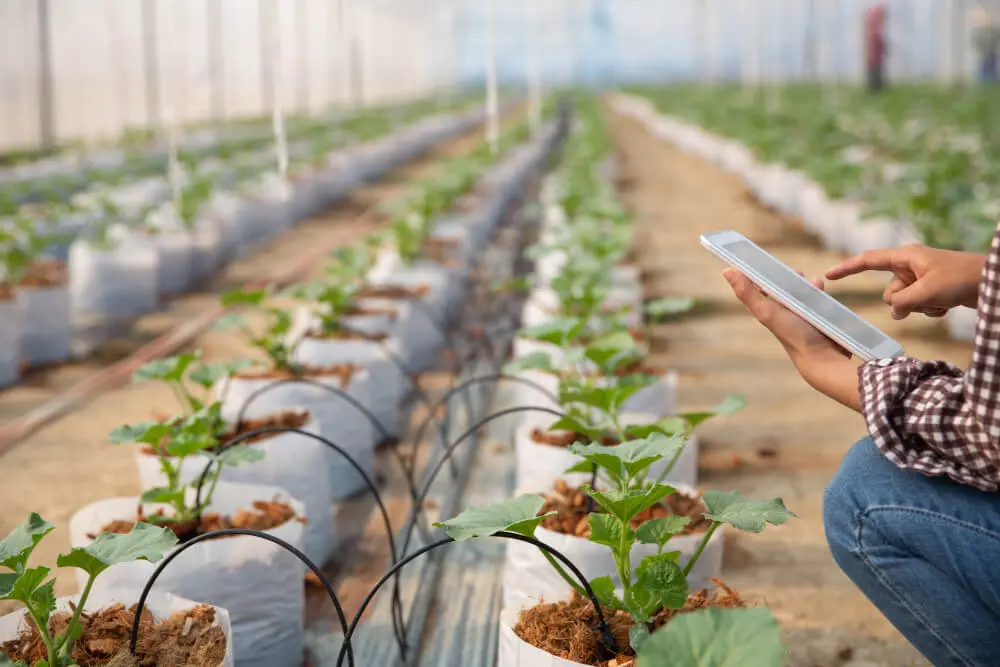
Smart Irrigation Monitoring System
An ESP32-based system that reads soil data in real time, triggers irrigation automatically, and reports to a cloud dashboard.
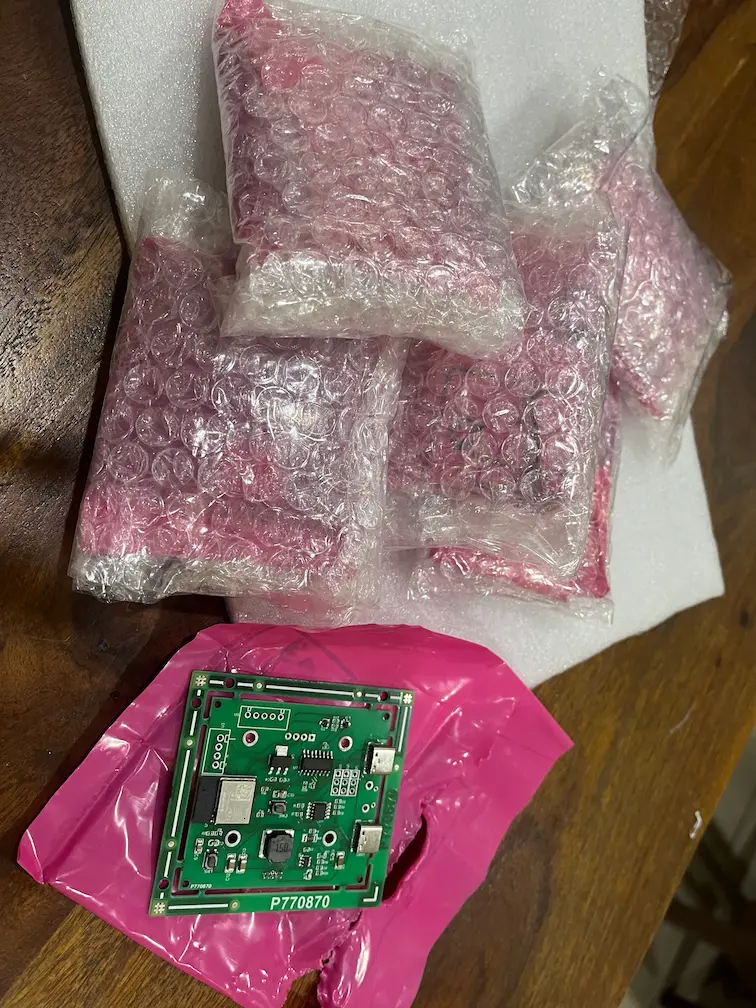
Custom Air Quality Monitor
An ESP32 air-quality platform with custom PCB, firmware and cloud dashboard, built for an indoor monitoring client. The same platform carries over to our grain-silo ammonia monitoring, with the sensing element swapped for a gas sensor.
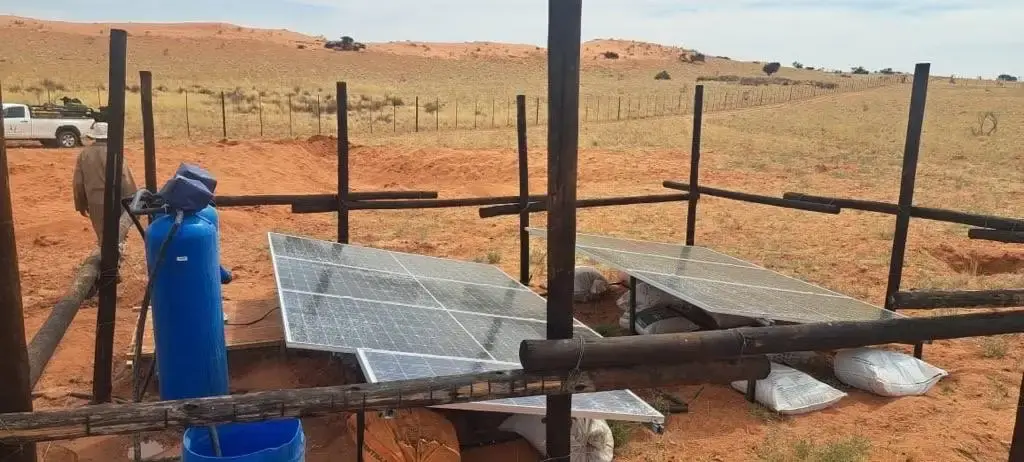
Solar-Powered RFID Water Dispenser
An off-grid, solar-powered ESP32 system with metered valve control, running fully offline in a remote semi-arid region.
What a Field Deployment Needs Beyond the Sensor
Our irrigation monitor was built so the same system works from one node to a large deployment. See how each point was handled in the irrigation monitor case study.
Calibration
Firmware recalibrates sensor baselines over time to account for drift and environmental shifts.
Offline Operation
Nodes keep acting on their readings with no internet and sync to the dashboard when connectivity returns. Our solar-powered water dispenser runs entirely offline in a remote region.
Security
TLS on all MQTT and HTTPS traffic, device authentication, and access controls on remote commands.
Scale
The same architecture runs from a single node to a large deployment without redesign.
From Prototype to Fabricated Batch
Field hardware has to be manufacturable, not just working on a bench. On our air quality monitor, the same platform we adapt for silo monitoring, the design was laid out for pick-and-place assembly, with components chosen for availability at volume. An initial batch of six fabricated, tested units followed, and the client can send the production files straight to a contract manufacturer.
Read the full air quality monitor case study.
Built For Teams Working in Agriculture
This is for teams building a real system that goes into a field, not a one-off hobby build.
Agritech Startups
You have a concept for a field device or monitoring system and need it built end to end: sensors, firmware, enclosure and dashboard that survive real farm conditions.
Irrigation & Equipment Brands
You make the pump, valve or equipment and want sensing and automation built into the product itself rather than added as a separate accessory.
Farms & Research Operations
You need monitoring that runs unattended across a large site and gives you reliable data on conditions you currently check by hand.
Our Approach
Not aspirational. This is the setup our devices go through.
In-House PCB Design
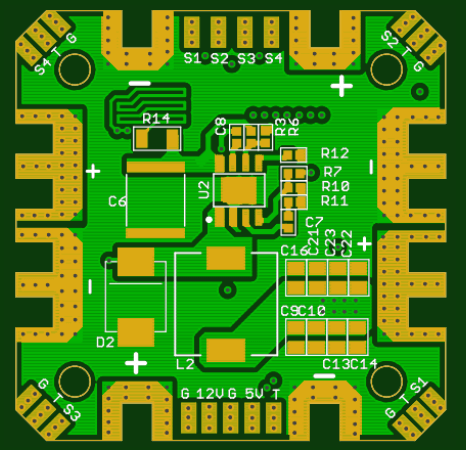
Boards laid out around the real power, size and environmental limits of the field site, not adapted from a generic dev board.
Enclosure Iteration
Enclosures designed and iterated on our own floor, so a fit or sealing issue is fixed quickly rather than waiting on an outside shop.
Firmware & Dashboard Together
Device firmware and the cloud dashboard are built by the same team, so the data path from sensor to screen is designed as one system.
Field Validation
Systems are tested in the environment they will run in before handover, not only checked on the bench.
Technologies We Work With
Picked per project based on the site's power budget, range and environment, not whatever is most familiar.
Microcontroller & Compute Platforms
 ESP32
 Raspberry Pi
 STM32
 Nordic nRF
Connectivity & Protocols
 WiFi
 LoRa
 BLEBLE Mesh
 Matter
 RS-485 (wired field bus)
Radio choice follows the site: LoRa for long distances, BLE and BLE Mesh for short-range node clusters, Wi-Fi where coverage exists, and RS-485 where a wired bus is more reliable than any radio, such as long cable runs to pumps, meters and controllers.
PCB & Enclosure Design Tools
 KiCad / Altium (PCB Design)
 SolidWorks (Enclosure Design)
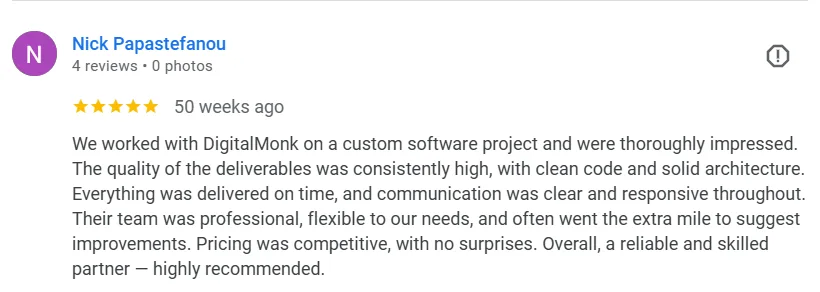
What Clients Say


What clients say on Google
Questions Before You Start
Got questions before starting your agritech project? Here are the ones we hear most.
Yes. That means choosing the sensors and microcontroller, designing the PCB, building an enclosure that survives outdoor conditions, writing the firmware, and setting up the dashboard that shows the data. The same team handles every layer, so the pieces are designed to work together rather than stitched together afterwards.
Field sites often have patchy coverage, so the decision logic runs on the device itself. A node keeps acting on its sensor readings while offline and syncs its data to the dashboard once a connection is available. Connectivity is needed for remote monitoring, not for the device to do its job.
The enclosure, connectors and cable entry points are designed for the environment the device will actually sit in: sun, moisture, dust and temperature swings. We aim to validate this in the field rather than rely on bench testing alone, since a design that works on a desk can fail within a season outdoors.
Yes, when the product needs them. Firmware, cloud backend and the interface people use to monitor and control the system are part of the same engagement, so the data path from sensor to screen is designed as one system.
Our shipped agritech work so far is soil-moisture-driven irrigation automation, described in the irrigation monitor case study on this page, and grain-silo ammonia monitoring, which runs on the same ESP32 platform as our air quality monitor with a gas sensor as the sensing element. We only list work that has actually been delivered, so ask us about your specific use case and we will tell you plainly how close it is to something we have built.
Keep Reading
IoT in Agriculture Guide →
The full architecture breakdown for irrigation, soil and crop analytics.
ESP32 Real-Time MQTT Dashboard →
How the dashboard layer of a connected system works.
Hire an ESP32 Developer →
Work with the team that builds these systems.
Irrigation Monitor Case Study →
The shipped soil-moisture irrigation project, end to end.
Let's Build Your Agritech System
Tell us where things stand, whether an idea, a prototype or something in between, and we'll give you a straight answer on what it takes to build it.
NDA signed up front, before anything else.