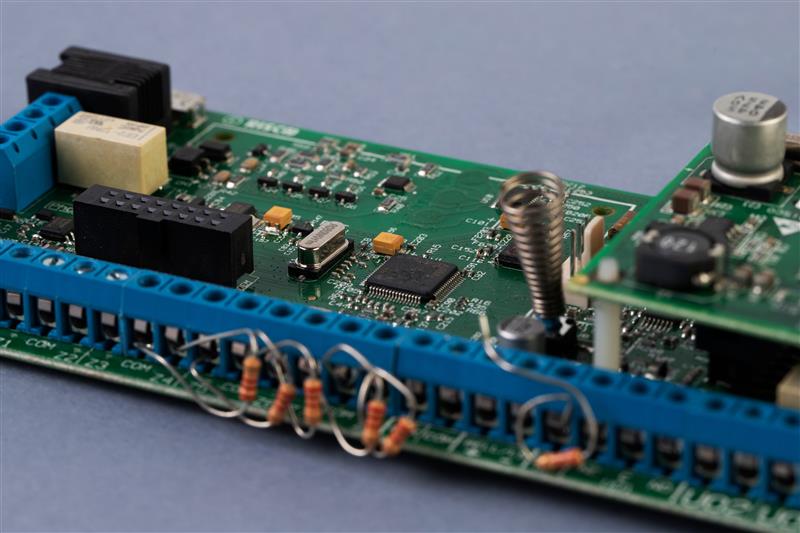
When companies hire embedded developer talent, most evaluate GitHub profiles, portfolio links, and hourly rates. Almost nobody asks the most critical question: "Do you have a hardware lab?"
Embedded software development isn't just writing C code in an IDE. Firmware interacts with real sensors, real power supplies, and real electrical noise. Without lab infrastructure, even well-written code fails when it hits the physical world. This article explains why lab access is the single most underrated factor when you hire embedded developer talent for any serious project.


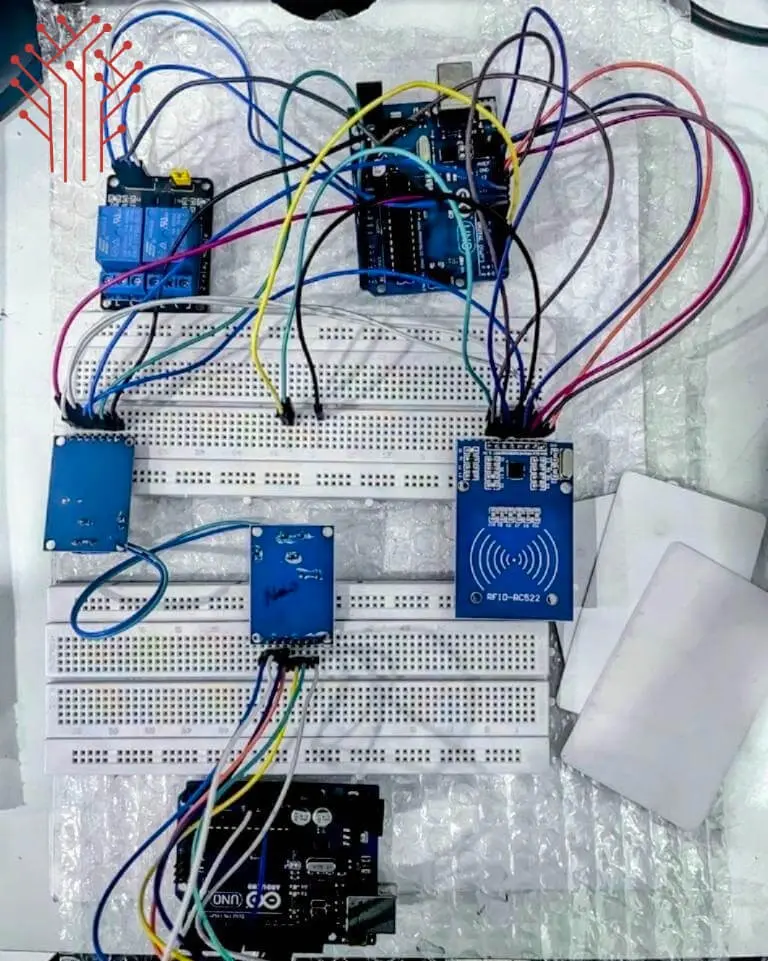
Most embedded software development starts in an IDE. That's fine — but developers who stop there miss entire categories of bugs:
These issues are invisible in simulation. They only appear when firmware meets real hardware.

A developer working only in a simulator cannot find these issues before delivery.
That's why businesses that want reliable firmware must hire embedded developer talent with access to physical boards and proper test equipment. See how this fits into our embedded product development approach.
A professional embedded software development lab isn't a desk with a USB cable. It's a structured testing environment built to catch the bugs that simulators miss.
Testing across real architectures — not just one dev kit.

Real-world component testing — not simulated ideal values.
Eliminating the #1 cause of firmware field failure: power instability.
Catching timing issues and signal noise that IDEs can't see.
One-stop hardware — from custom PCB design to in-house 3D-printed enclosures, not just firmware.
The gap between the two becomes visible during deployment — when failures are most expensive.
| Firmware Aspect | IDE-Only Developer | Lab-Backed Developer |
|---|---|---|
| Bug Discovery | Found during client testing | Found before code delivery |
| Power Validation | Assumed stable in IDE | Tested at multiple voltages |
| Sensor Accuracy | Simulated ideal values | Calibrated with real hardware |
| Interrupt Handling | No physical timing test | Validated on real silicon |
| Production Readiness | Requires client-side rework | Firmware ready to scale |
Critical Insight: When you hire embedded developer talent without asking about lab access, you're assuming they can test what they can't actually test. The result? Firmware that works in an IDE and fails in the field.
Embedded software development for commercial deployment means your firmware must survive real-world conditions: voltage noise, temperature extremes, and continuous operation. Lab-backed development is the only way to validate this before shipping.
50% Code + 50% Validation
Writing firmware is only half the job. Hardware validation in a real lab environment is the other half.
Skipping hardware validation leads to problems that only appear after deployment:
Many businesses assume remote embedded software development means slower iteration. That's only true when the developer lacks hardware access. Lab infrastructure eliminates the back-and-forth shipping cycle — we test in-house, fix in-house, and deliver validated firmware.
"Our engineers test, modify, and validate firmware in-house — on your exact hardware profile. This removes weeks of guesswork from every project."
When you scale from prototype to production, small firmware oversights cause large-scale failures. Lab-backed embedded software development catches these before they ship.
Professional embedded software development labs run validations that IDE-only developers simply cannot perform.
Production Insight: If you're scaling a product, always hire embedded developer talent with real lab infrastructure — not just a strong GitHub profile. Embedded software development without hardware validation is a risk you can't afford at scale.
When you hire embedded developer talent for critical projects, you're not just buying code — you're investing in product reliability.
ESSENTIAL FOR:
Hiring a low-cost embedded developer without lab infrastructure may save upfront. But the downstream costs are severe:
"Embedded firmware failures are far more expensive than software bugs — they ship inside physical products."
When you decide to hire embedded developer talent for a commercial product...
Embedded software development separates itself from all other engineering disciplines by one simple fact: your code runs inside real hardware, in real environments, under real conditions. If your development partner doesn't test in a real lab — your customers will be the ones who discover the bugs.
Lab access isn't a nice-to-have. It's the baseline for production-grade firmware.